
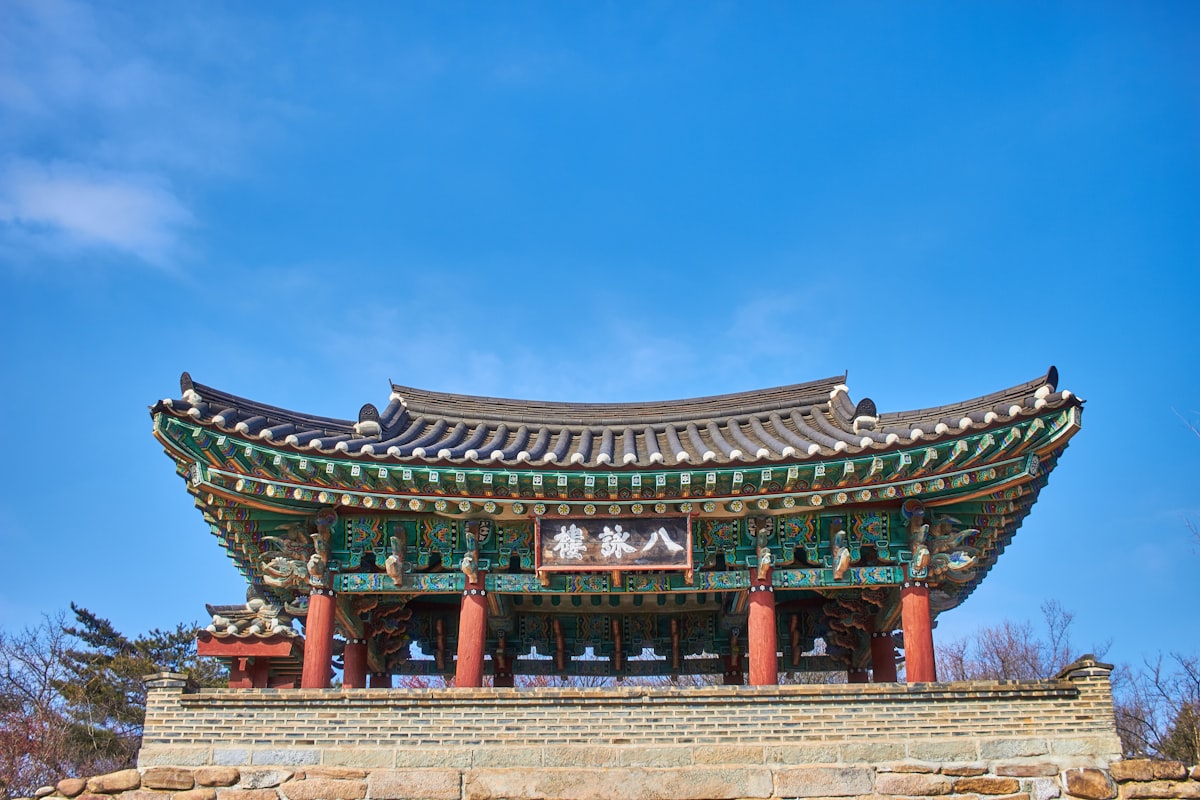
This guide was curated from 10 Korean-language blog posts, 6 YouTube videos, and Unsplash and Korea Tourism Organization photographs, then reimagined for international travelers. Full attributions are listed at the bottom of this article.
Jecheon (제천) has long been called the “City of Cheongpung-myeongwol” (청풍명월, literally “Clear Wind, Bright Moon”) — a nickname that captures this inland Chungbuk city’s essence in four syllables. Clear breezes, moonlight spilling across a lake, and mountain shadows stretching over the water. Jecheon isn’t flashy like Seoul or Busan, but once you set foot here, its quiet depth pulls you in. A thousand-year-old reservoir still holding water for local farms. A cable car crossing Chungju Lake. A single bite of sticky rice cake from a shop that’s been open since the 1960s. The city’s official slogan — “City of Natural Healing” — is one of the rare cases where such branding isn’t an exaggeration. It’s also where the Korean films Bakha-satang (박하사탕, Peppermint Candy) and Radio Star (라디오스타) were shot. This is a trip where you set aside speed and walk slowly.
Video: “무조건 가야하는 충청도 제천 여행코스” by 맛쫑tour
1. Cultural and Historical Spaces
1-1. Uirimji — A Thousand-Year-Old Reservoir That Still Works
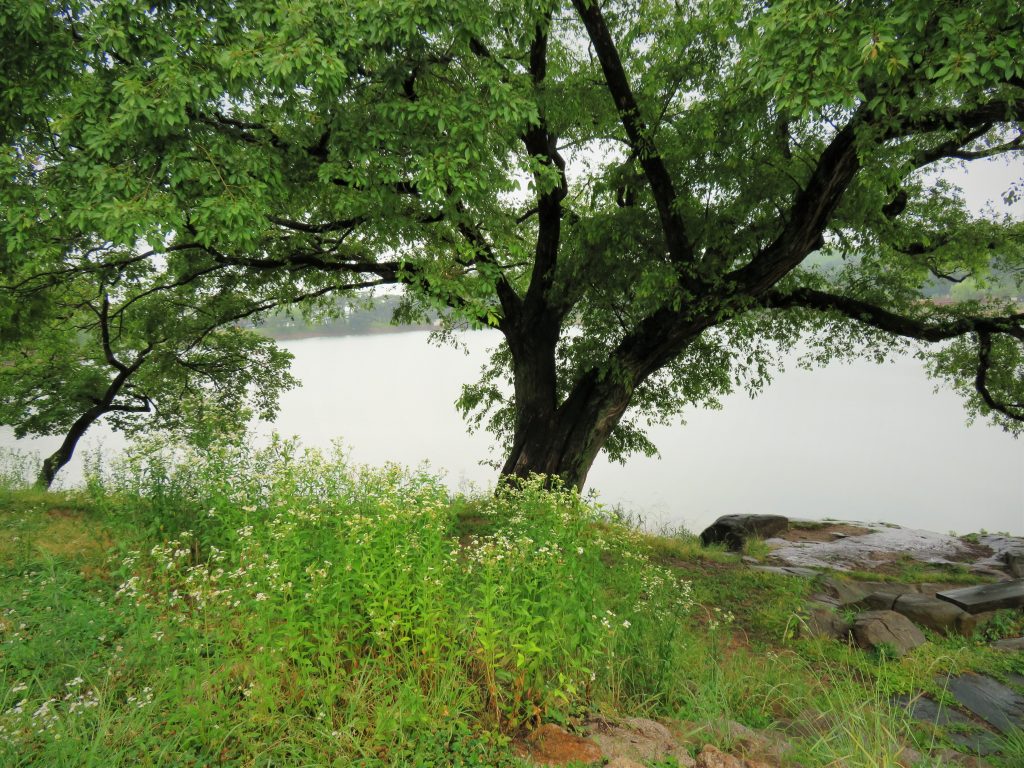
Uirimji Reservoir — Photo by Kyle Magnuson (CC BY 2.0, Wikimedia Commons)
Every Jecheon trip begins at Uirimji (의림지). Built during the Samhan period (roughly the 1st–3rd centuries), this reservoir is counted alongside Gimje’s Byeokgolje and Miryang’s Susanje as one of Korea’s three great ancient irrigation works — but Uirimji is the only one still actively holding water today. Designated Scenic Site No. 20, it is flanked by Yeonghojeong (영호정, a pavilion built in 1807) and Gyeonghoru (경호루, built in 1948), both sitting serenely by the water’s edge. A 30-meter waterfall called Yongchu Pokpo (용추폭포, Dragon Pool Falls) adds drama. More recently, a glass observatory and lakeside boardwalk have been added, giving the site a gentle modern layer.
The real magic of Uirimji, though, is its healing forest trail. Course 1 (the “Natural Healing Course”) is only 0.8 km long — about 20 to 25 minutes — making it accessible to anyone. At Solbat Gongwon (솔밭공원, Pine Forest Park), you can walk barefoot through the pine grove, and there’s even a small channel where you can wash your feet afterward. Continue upstream from Solbat Park and you’ll reach Biryongdam (비룡담, Dragon Soaring Reservoir), a secondary reservoir with a full 4.5 km boardwalk loop around its perimeter. At night, a glass-castle sculpture lights up, giving the reservoir an entirely different atmosphere from the daytime.
- Address: 241 Mosan-dong, Jecheon-si, Chungbuk
- Admission: Free
- Parking: Free (spacious lot)
- Contact: 043-651-7101
Video: “제천의 멋진 여행지 9곳” by 여행브로셔
1-2. Cheongpung Cultural Complex — Goryeo Relics Rescued from the Water
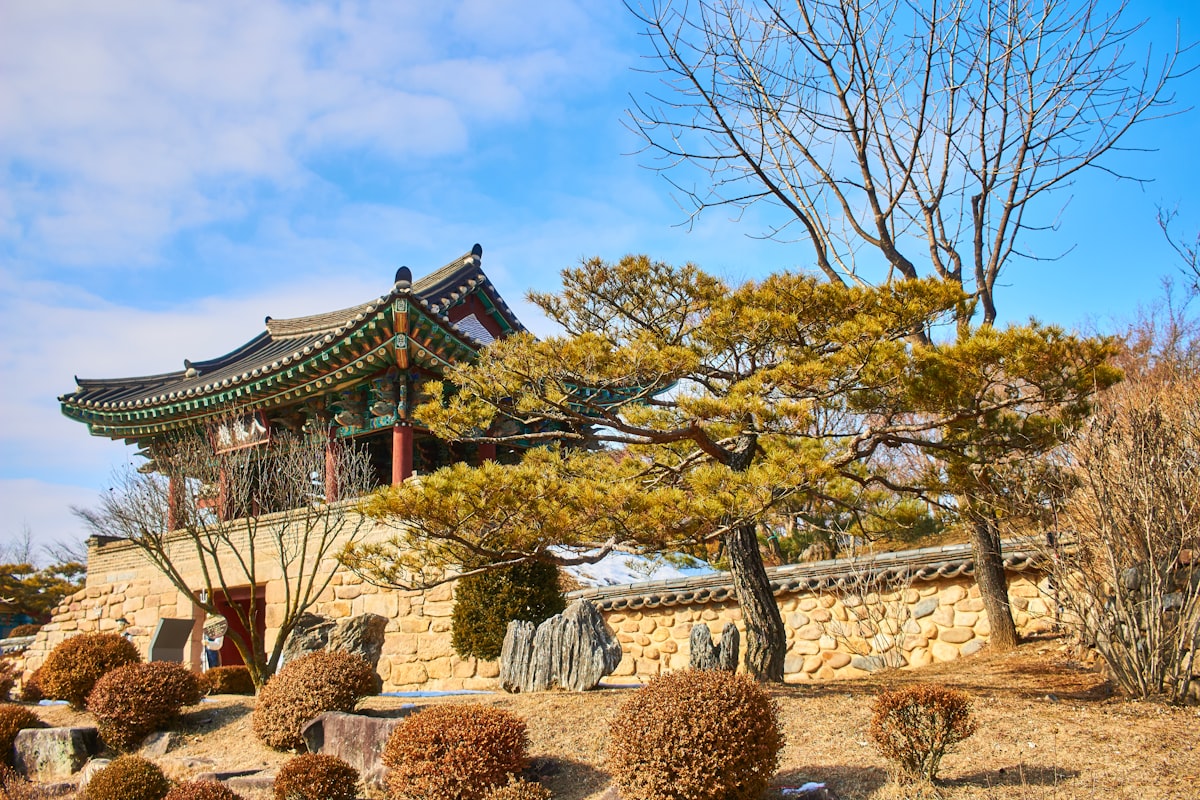
When the Chungju Dam was built, dozens of historic structures in the Cheongpung area faced submersion. Forty-three cultural artifacts were relocated to a single hillside, creating this open-air museum. Highlights include Hanbyeokru (한벽루, a Goryeo-dynasty government pavilion), a stone Buddha statue, and four traditional houses displaying over 1,600 everyday artifacts — all set against the vast backdrop of Chungju Lake. The combination of lake and heritage is a scene uniquely Jecheon.
1-3. Cheongpungho Lakeside Cable Car — Nine Minutes Above the Water
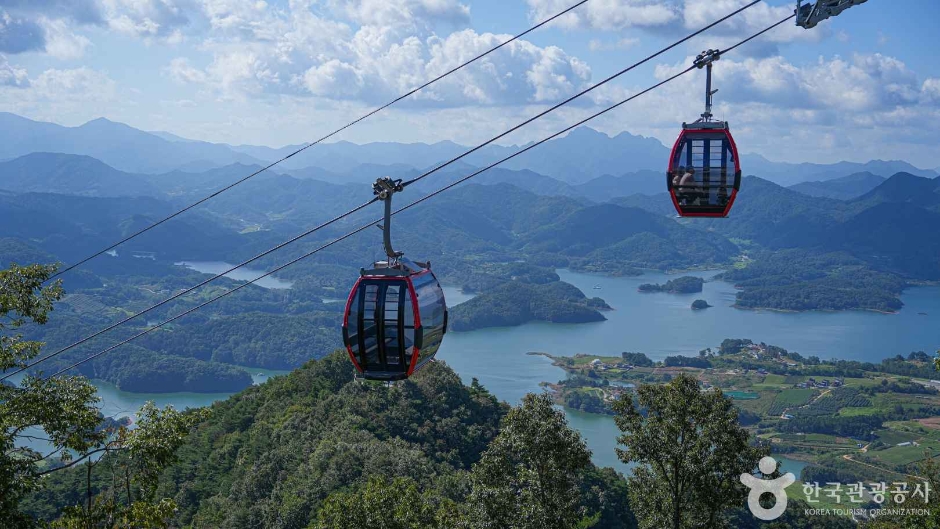
Cheongpungho Lakeside Cable Car — Korea Tourism Organization (KOGL Type 1)
This cable car covers the 2.3 km stretch from Multae-ri Station to the summit of Bibongsan (비봉산) in just nine minutes. Selected for the Korea Tourism Top 100 list, the aerial panorama of Cheongpungho (청풍호, the lake formed by Chungju Dam) is one of the trip’s undeniable highlights.
1-4. Oksunbong Suspension Bridge — 222 Meters of Thrill Over the Lake
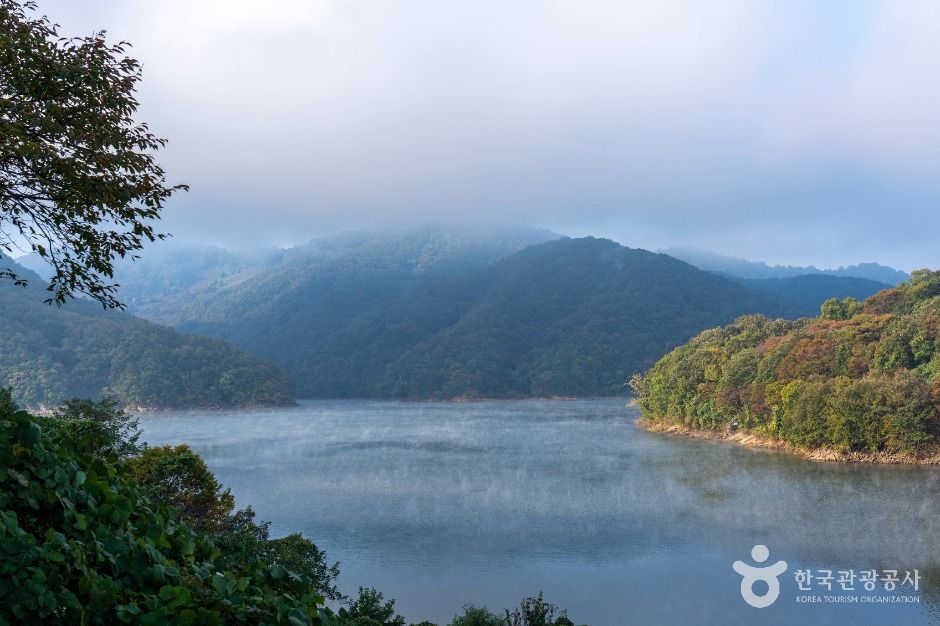
Oksunbong Trail, Cheongpungho Lake — Korea Tourism Organization (KOGL Type 1)
Since opening in 2021, this bridge attracted 600,000 visitors in its first year alone, making it Jecheon’s breakout attraction. At 222 meters long and 1.5 meters wide, the suspension bridge sways gently above Chungju Lake. After crossing, a 408-meter walking deck follows the shoreline. Budget about 30 minutes for the round trip.
- Admission: 3,000 KRW (~$2.10 USD) for adults — but 2,000 KRW is refunded in local currency
💡 Local Tip (via “유자와 모과”‘s blog): Of the 3,000 KRW (~$2.10 USD) admission fee, 2,000 KRW (~$1.40 USD) comes back as Jecheon local currency (제천사랑상품권). You can spend it at nearby restaurants and cafes, so the bridge effectively costs just 1,000 KRW (~$0.70 USD).
1-5. Baeron Holy Ground — The Hidden Birthplace of Korean Catholicism
Baeron Seongji (배론성지) is recognized as the cradle of Korean Catholic evangelization. It holds the tomb of Father Choe Yang-eop (최양업), the second Korean-born Catholic priest. A walking path follows a deep valley that transforms into a spectacular corridor of autumn foliage each fall. Even without religious interest, the stillness of the valley and forest makes for a deeply restorative visit.
2. Local Food — Honest Bowls With Stories to Tell
Jecheon’s food isn’t flashy. Instead, each bowl carries a long story, and the prices are refreshingly honest. From the crimson fishcake skewers of the central market to a 60-year-old snack shop’s sticky rice cakes, here are the must-eats organized by dish.
Video: “충청북도 제천 맛집 Best 11” by 하이갱스
2-1. Ppalgan-odeng — The Symbol of Jecheon’s Central Market
Ppalgan-odeng (빨간오뎅, red fishcake skewers tossed in gochujang chili sauce) is the street food most closely associated with Jecheon. Inside Jungang Sijang (중앙시장, Jecheon Central Market), the shop Jecheon Ppalgan-odeng (제천빨간오뎅) has been featured on KBS’s Hanguk-in-ui Bapsang (한국인의 밥상, The Korean Table) and Saengsaeng Jeongbo (생생정보). Six skewers cost just 3,000 KRW (~$2.10 USD).
2-2. Deongsil Bunsik — Sixty Years of Sticky Rice Cakes
Deongsil Bunsik (덩실분식) has been in business since the 1960s — a living piece of Jecheon’s culinary history. The specialty here is chapssal-tteok (찹쌀떡, glutinous rice cakes filled with sweet red bean paste), and the shop has been covered on SBS’s Saenghwal-ui Dalin (생활의 달인, Master of Living) and personally visited by the legendary food-manga author Heo Young-man (허영만) for his series Siksaek (식객, The Gourmet). Six rice cakes cost 7,200 KRW (~$5.10 USD). The quality transcends anything the humble word “bunsik” (snack shop) might suggest.
2-3. Sirae-gi-bap and Makguksu — How Locals Start Their Mornings and Afternoons
Jecheon Sirak-guk (제천시락국) is a sirae-gi (시래기, dried radish-leaf) specialist that was featured on Siksaek Heo Young-man-ui Baekban-gihaeng (식객 허영만의 백반기행, Heo Young-man’s Home-Meal Journey). It opens at 6:00 AM, and a steaming bowl of sirae-gi-bap (시래기밥, rice with braised dried radish greens) at 10,000 KRW (~$7.10 USD) is how Jecheon locals shake off the morning chill.
For lunch, head to Uirimji Makguksu (의림지막국수), a buckwheat noodle shop right in front of Uirimji. Ranked No. 1 on Naver Place for Jecheon restaurants, it’s the natural companion to a morning walk through the healing forest: hike first, then cool down with a bowl of chilled makguksu (막국수, buckwheat noodles in icy broth).
Video: “제천 즐기기 — 덩실분식, 빨간오뎅, 의림지, 두꺼비식당” by 마요네쥬
Bonus: Dukkeobi Sikdang and Hoban Sikdang
Dukkeobi Sikdang (두꺼비식당, literally “Toad Restaurant”) is ranked No. 1 on Google Place for Jecheon. It specializes in maeun-galbi-jjim (매운갈비찜, spicy braised short ribs), cheongguk-jang (청국장, fermented soybean stew), and tofu dishes. The tofu hot pot runs 12,000 KRW (~$8.60 USD). If you’re craving gondeure-bap (곤드레밥, rice cooked with thistle greens — a Chungbuk mountain specialty), try Hoban Sikdang (호반식당) and their gondeure sotbap jeongsik (곤드레솥밥정식, stone-pot thistle-green rice set meal) at 12,000 KRW (~$8.60 USD).
💡 Local Tip (via jdblue2022’s blog): Jecheon Sirak-guk opens at 6 AM. Arrive early, warm up with a bowl of sirae-gi-bap, then walk the Uirimji forest trail while the morning air is still fresh. This is the most efficient way to start a Jecheon day. On weekends it can fill up before noon, so don’t linger.
3. Cafes — Architecture and Lake Views
Jecheon’s cafe scene has grown rapidly in recent years. Architecturally striking spaces have been opening near Cheongpungho and Uirimji, and some travelers now visit Jecheon for the cafes alone.
Concrete Wall — The Award-Winning Cafe
Concrete Wall (콘크리트월) won the 2023 Korean Institute of Architects Award, placing it at the center of Jecheon’s emerging cafe culture. As the name suggests, its exposed concrete walls carry a sculptural weight that even non-architecture enthusiasts can feel instinctively.
- Note: Closed on Mondays.
Video: “VLOG 1박2일 제천 — 모노레일, 덩실분식, 콘크리트월카페” by 김무빈
Coffee Laque — The Lake at Your Feet
Coffee Laque (커피라끄) is a large cafe perched right beside Cheongpungho. Sit outside and the lake seems to lap at your feet; climb to the rooftop and the view expands to mountain ridges beyond the water. In autumn the lake reflects blazing foliage; in spring, mist drifts across its surface. The local move is to pair your coffee with sagwa-ppang (사과빵, apple-shaped bread — a Jecheon specialty dessert).
4. Practical Travel Tips
Getting There
Jecheon is accessible via the Jungbu Naeryuk Expressway (Jecheon IC), and KTX trains also stop at Jecheon Station, making public-transit trips feasible. However, the key attractions — Uirimji, Cheongpungho, Oksunbong — are spread outside the city center, so a rental car gives you far more freedom of movement.
Best Seasons
Spring (April–May) and autumn (September–October) are ideal. In spring, fresh green foliage at Uirimji’s Solbat Park pairs with morning mist over Cheongpungho. In autumn, the valley at Baeron Holy Ground blazes with color and Coffee Laque’s rooftop becomes a front-row seat to the foliage reflected on the lake. In summer, Deokdong Gyegok (덕동계곡, Deokdong Valley) is a popular escape for locals seeking relief from the heat.
Payment
Most restaurants and cafes accept cards. However, some stalls in Jungang Market are cash-only, so carry a small amount of cash. The local currency refunded at Oksunbong Suspension Bridge — Jecheon Sarang Sangpumgwon (제천사랑상품권) — works like cash at participating shops nearby.
Map Apps
In Korea, Naver Map or KakaoMap are far more accurate than Google Maps. This is especially true in smaller inland cities like Jecheon, where Google Maps may list incorrect hours or miss restaurants entirely. Both apps now support English interfaces.
Suggested 1-Night, 2-Day Itinerary
Day 1: Uirimji healing forest trail → Biryongdam boardwalk loop → Uirimji Makguksu (lunch) → Cheongpung Cultural Complex → Cheongpungho Cable Car → Coffee Laque (cafe) → check in
Day 2: Jecheon Sirak-guk (breakfast, 6 AM) → Oksunbong Suspension Bridge → Jungang Market ppalgan-odeng → Concrete Wall (cafe) → Deongsil Bunsik chapssal-tteok (snack) → depart
Video: “여행하면 돈을 돌려주는 충북 1위 관광지 제천여행” by 호정이는 여행중
5. A City That’s Better for Being Unknown
Jecheon is a city that benefits from its own obscurity. You won’t jostle through crowds at every viewpoint. You won’t queue outside restaurants. You won’t fight for a cafe seat. What you will find is a lake, a forest, and a thousand-year-old reservoir quietly holding water as it has for centuries.
Jecheon-born writer “Yuja-wa Mogwa” (유자와 모과) revisited her hometown after a long absence and wrote simply: “Jecheon, you’ve grown up.” The boardwalk wrapped around Biryongdam Reservoir. The suspension bridge over Oksunbong. An award-winning concrete cafe. This small city has been growing — quietly, but unmistakably — on its own terms.
If you’re already thinking about coming back in winter to see Cheongpungho blanketed in snow, or in summer to dip your feet in Deokdong Valley, that impulse is Jecheon’s quiet invitation. Accept it.
Sources & References
This article was curated from the following Korean-language sources:
Blogs (7 sources)
- “제천 여행(1): 의림지, 배론성지, 박달재, 포레스트 리섬” by 프란치스코 — https://puco2009.tistory.com/entry/제천-여행1-의림지-배론성지-박달재-포레스트-리섬
- “[제천여행] 제천여행코스, 물 맑고 산수 좋은 청풍명월의 고장” by yun-blog — https://yun-blog.tistory.com/2469
- “제천 맛집 베스트10 추천 2025 로컬 리스트 순위” by jdblue2022 — https://jdblue2022.tistory.com/entry/2025-제천-맛집-베스트10
- “가을날 제천 당일 여행 추천: 의림지 치유숲길과 청풍호” by Sweeting — https://sweeting.tistory.com/63
- “제천 여행” by 유자와 모과 — https://brunch.co.kr/@alcong0120/411
- “충북 제천 여행 중 가볼만한 곳(+여행코스, 케이블카)” by 오토스케치 — https://brunch.co.kr/@37ee2acb32244bb/206
- “제천 가볼만한 곳 10, 평화로운 힐링이 가능한 여행” by 호텔스닷컴 — https://brunch.co.kr/@hotelscomkr/786
Videos (6 sources, embedded with attribution)
- “무조건 가야하는 충청도 제천 여행코스” by 맛쫑tour — https://www.youtube.com/watch?v=M8PPTyS3-qQ
- “제천의 멋진 여행지 9곳” by 여행브로셔 — https://www.youtube.com/watch?v=rkh0ivnOR9M
- “충청북도 제천 맛집 Best 11” by 하이갱스 — https://www.youtube.com/watch?v=vEkU-O9K_Wc
- “제천 즐기기 — 덩실분식, 빨간오뎅, 의림지, 두꺼비식당” by 마요네쥬 — https://www.youtube.com/watch?v=XBj-OxSo6Co
- “VLOG 1박2일 제천 — 모노레일, 덩실분식, 콘크리트월카페” by 김무빈 — https://www.youtube.com/watch?v=cJWX1uX55D8
- “여행하면 돈을 돌려주는 충북 1위 관광지 제천여행” by 호정이는 여행중 — https://www.youtube.com/watch?v=92Ri-78DmuQ
Images
- Photo by Mathew Schwartz on Unsplash — https://unsplash.com/@cadop
- Korea Tourism Organization (한국관광공사) — KOGL Type 1 licensed images via TourAPI
All content has been summarized and adapted for international readers. Original authors retain full copyright of their work.