

This guide was curated from 20 Korean-language blog posts, 7 YouTube videos, and 5 photographs, then reimagined for international travelers. Full attributions are listed at the bottom of this article.
About two hours from Seoul, Jecheon (제천) sits in northern Chungcheongbuk-do (충청북도, North Chungcheong Province). Koreans call it the land of cheongpung-myeongwol (청풍명월, “clear wind and bright moon”) — and the nickname fits. Jecheon holds some of Korea’s finest inland lake scenery: a 1,500-year-old reservoir, a vast man-made lake ringed by mountains, cable cars and monorails gliding above the water, and hearty food rooted in the region’s reputation as Korea’s herbal medicine capital. The fact that few international travelers have discovered it yet is part of the charm.
Video: “무조건 가야하는 충청도 제천 여행코스” by 맛쫑tour
1. Ancient Waters and Mountain Views — Uirimji and Cheongpungho
Jecheon’s two anchor attractions are Uirimji (의림지, a historic reservoir) and Cheongpungho (청풍호, Cheongpung Lake). One offers stillness; the other, adventure.
1-1. Uirimji — A 1,500-Year-Old Reservoir and Forest Walk
Uirimji is one of Korea’s three great reservoirs, believed to date back to the Samhan period (삼한시대, the earliest Korean tribal confederacies, roughly 1st century BC). A tree-lined path called Jerim (제림, the forest embankment) encircles the lake, passing centuries-old pines and willows. Follow the trail deeper and you reach Yongchu Waterfall (용추폭포) — modest in height but atmospheric within the forest.

Photo: Ryu Geum-yeol (CC0) via Wikimedia Commons
A recently installed glass-floor observation deck lets you walk above the water for a mild thrill, and the adjacent Uirimji Parkland makes this area family-friendly. Budget about 40 minutes for the walk alone, or half a day with surrounding attractions.
💡 Local Tip (via “미니픽”‘s blog): Visit in the early morning to catch mist hovering over the reservoir. In September and October, the Jerim forest trail reaches peak autumn color.
1-2. Cheongpungho Cable Car and Monorail
Cheongpungho was created when the Chungju Dam flooded a mountain valley, forming a lake so vast locals call it “the inland sea.” The most dramatic way to take it in is from above.
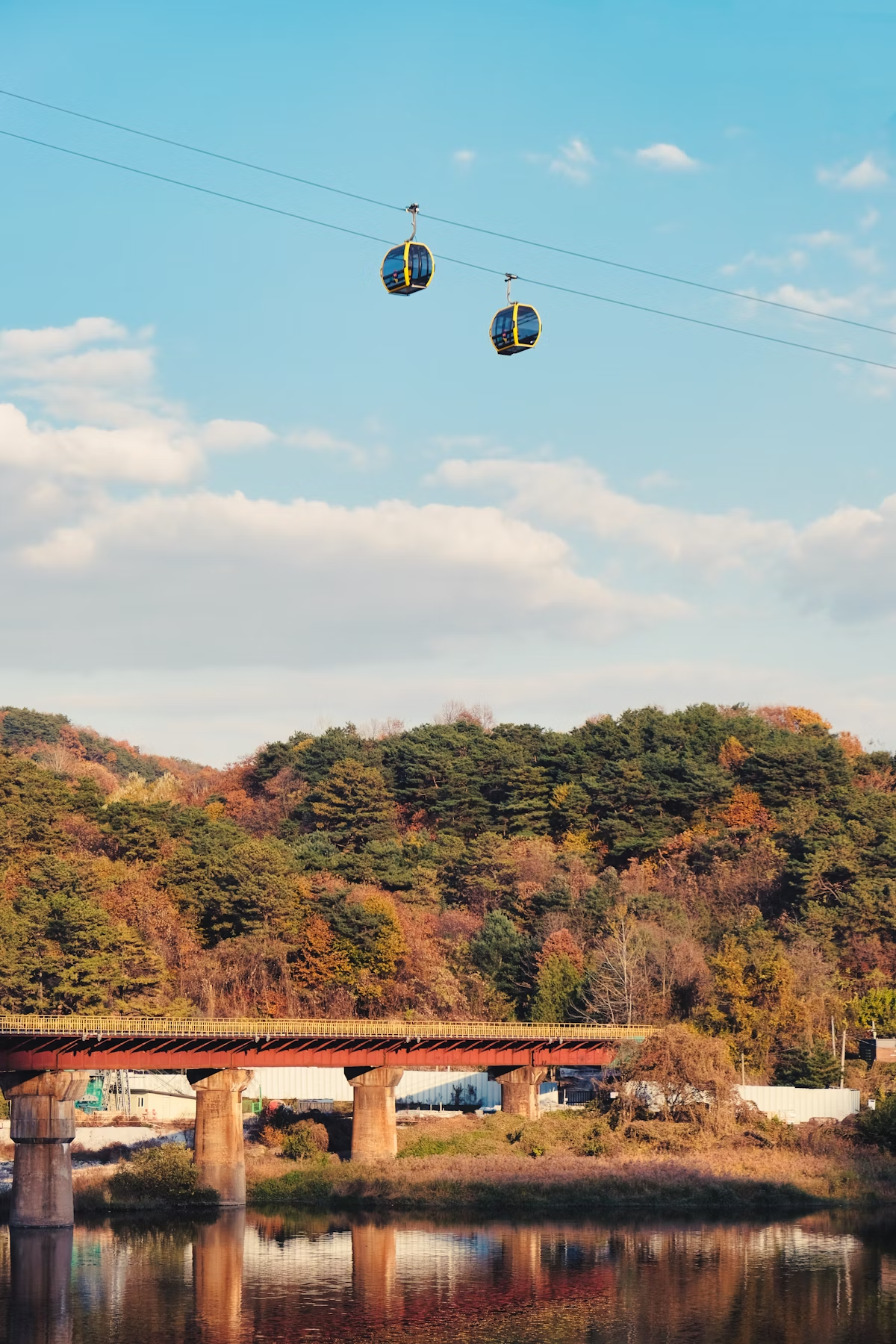
The Cheongpungho Cable Car (청풍호반 케이블카) crosses the lake on a 30-minute round trip to the summit of Bibongsan (비봉산). The Cheongpungho Monorail (청풍호 관광 모노레일) is a six-seat open-air rail car that climbs Bibongsan through the forest over about 30 minutes, with one section tilting at 45 degrees for a genuine adrenaline spike. A monorail round-trip ticket costs 12,000 KRW (~$8.50 USD).
💡 Local Tip (via “에이스베티”‘s blog): During peak season, expect waits of two hours or more — arrive early to buy tickets. The monorail is completely open-air, so it gets hot in summer. Spring and autumn are ideal.
Video: “Top 10 Places to Visit in Jecheon, North Chungcheong Province” by 코투르 Kotour
1-3. Cheongpung Cultural Heritage Complex — Treasures Saved from the Flood
When the Chungju Dam was built, dozens of cultural artifacts in the flooding zone were relocated to a hillside above the lake. The Cheongpung Cultural Heritage Complex (청풍문화재단지) is now an open-air museum preserving 43 pieces — Joseon-era government buildings, stone relics, and folk houses — all overlooking Cheongpungho. Brunch essayist “진숙” called it “a landscape I wanted to keep secret.”

Photo: Jeon Han / Korea.net (CC BY-SA 2.0) via Wikimedia Commons
1-4. Oksubong Suspension Bridge — Glass Floors Over Cliff and Lake
Oksubong Suspension Bridge (옥순봉 출렁다리) stretches over 200 meters, with some sections floored in transparent glass. Look down and you see Cheongpungho and jagged rock cliffs beneath your feet. The bridge may close on particularly windy days.
Video: “3 Recommended Fall Travel Destinations in Jecheon” by 유리소리TV
2. Herbal Roots and Honest Flavors — The Food of Jecheon
Jecheon is known as Korea’s “herbal medicine capital,” and that identity shapes its cuisine: ingredients are wholesome, flavors are deep without being aggressive. Blogger “네모왕자” put it plainly: “If you think Jecheon is just about red fish cakes, think again.”
2-1. Bbalgan-odeng — Jecheon’s Soul Food
Jecheon’s signature street snack is bbalgan-odeng (빨간오뎅, red fish cake — skewered fish cake slathered with spicy-sweet red gochujang sauce and topped with sliced scallions). Unlike the mild broth-based fish cakes found elsewhere in Korea, these are addictively salty-sweet-spicy. The original vendors cluster around Naeto Traditional Market (내토전통시장) and near Jecheon Station, and prices are low enough to grab a few sticks while standing.
Every February-March, the Jecheon Bbalgan-odeng Festival (제천 빨간오뎅 축제) takes over the plaza in front of Jecheon Station with tastings, performances, and hands-on cooking.
Video: “제2회 제천 빨간오뎅 축제” by 제천시
2-2. Golden Tteokgalbi and Kalguksu
Cheongpung Hwanggeum Tteokgalbi (청풍황금떡갈비) near the cable car specializes in tteokgalbi (떡갈비, grilled minced-beef patties) infused with turmeric, served alongside turmeric stone-pot rice and over a dozen side dishes arranged like a full hanjeongsik (한정식, traditional Korean set meal). The turmeric tteokgalbi set costs 26,000 KRW (~$18.50 USD). Blogger “에이스베티” noted: “Every single side dish was delicious.”
Uirimji Kalguksu (의림지칼국수) serves kalguksu (칼국수, hand-cut wheat noodles) in a broth enriched with anchovy, beef brisket, and hwanggi (황기, astragalus root — a local herbal specialty). Dumpling-kalguksu hot pot runs 13,000 KRW (~$9.20 USD); shrimp-seafood pancake 17,000 KRW (~$12 USD). Open Mon-Tue and Thu-Sun, 11:00-20:30 (closed Wednesday).
2-3. Acorn Jelly and Legendary Rice Cakes
Kkulchamnamu (꿀참나무) is a muk (묵, acorn jelly) specialist near Uirimji. Order the set and courses of acorn pancake, seasoned jelly salad, buckwheat crepes, acorn dumpling soup, and smoked duck arrive one after another. Blogger “happiggy” admitted: “I never liked acorn jelly before, but I’d eat this version every day.” Open 11:00-17:00, closed Tuesdays.
Deungsil Bunsik (덩실분식) has been making handmade chapssal-tteok (찹쌀떡, glutinous rice cakes) and donuts since 1965. After appearing on Saenghwal-ui Dalin (생활의 달인, a Korean TV show spotlighting everyday artisans), it earned nationwide fame. The red bean filling is gently sweet and the dough is perfectly chewy. Tickets are distributed at 8:30 AM and 1:30 PM — arrive on time or miss out.
💡 Local Tip (via “짱수달”‘s blog): To sample Jecheon’s food scene efficiently, book a “Gastro Tour” — a guided walking tour hitting five stops including Deungsil Bunsik and bbalgan-odeng vendors. The downtown route costs 26,000 KRW (~$18.50 USD) per person, takes about two hours, and requires advance reservation.
Video: “충북 제천 의림지 맛집 Best 8” by 하이갱스 higaengs
3. Lakeside Cafe Culture Around Uirimji
After a morning walk around the reservoir, the cafes clustered near Uirimji offer the perfect wind-down.
UNMOOD (언무드) sits on the road up to Uirimji. Floor-to-ceiling windows frame green rice paddies stretching into the distance. Three floors plus a rooftop and outdoor terrace mean every seat has a view. Signature drinks include a corn-shot latte at 6,800 KRW (~$4.80 USD) and a basil-tomato ade at 6,500 KRW (~$4.60 USD); americano is 4,500 KRW (~$3.20 USD). Open 11:00-24:00, closed Mondays. One travel blogger (“언니체력짱”) described it as “great coffee, great desserts, and a view that’s just as satisfying.”
Touhouse (투하우스) is the go-to for fruit bingsu (빙수, Korean shaved ice). Seasonal toppings like watermelon, mango, and blueberry crown snow-like ice at 15,000 KRW (~$10.60 USD). Open daily 11:00-23:30, with ample parking for groups.
Aunty Ann’s Jecheon (앤티앤스 제천점) is a three-story cafe near Uirimji whose rooftop is decorated in a camping theme. Signature item: cream cheese sticks. Open Mon-Tue and Thu-Fri 12:00-21:00, weekends 11:00-21:00, closed Wednesdays.
4. Getting There and Getting Around — Practical Tips
Transportation
- Seoul to Jecheon: Take the Mugunghwa (무궁화호, Korea’s standard express train) from Cheongnyangni Station — about 2 hours. There is no direct KTX service, though you can ride the KTX to Wonju and transfer. Express buses from Dong Seoul Terminal also take roughly 2 hours.
- Within the city: Uirimji and downtown are a 10-minute taxi ride apart. The Cheongpungho zone (cable car, monorail, cultural complex) is 20-30 minutes by car from downtown, so a rental car or taxi is recommended.
Best Time to Visit
- Spring (April-May): Cherry blossom season along Cheongpungho — lake and blossoms make a stunning combination.
- Autumn (September-November): Peak foliage on the Jerim forest trail; the monorail ride through autumn mountains is unforgettable.
- Winter (December-February): Bbalgan-odeng Festival season, but note that the monorail shuts down for winter.
- Summer (July-August): Neunggang Valley (능강계곡) is popular for swimming, but the monorail has no air conditioning.
Maps, Language, and Payment
Download Naver Map or KakaoMap — Google Maps has limited detail in Korea. English is rarely spoken in Jecheon, so keep Papago (파파고, a Korean-built translation app) or Google Translate’s camera mode ready. Most restaurants accept cards, but cash is easier at traditional markets.
How Long to Stay
Budget half a day for the Uirimji area and half a day to a full day for the Cheongpungho zone. An overnight 1-night, 2-day trip is ideal.
💡 Local Tip (via “미니픽”‘s blog): Spend Day 1 on Uirimji, downtown restaurants, and Naeto Market. Save Day 2 for the Cheongpungho area — cable car, monorail, and suspension bridge. This routing minimizes backtracking.
5. A City That Draws You Back

Photo: Jeon Han / Korea.net (CC BY-SA 2.0) via Wikimedia Commons
Jecheon has no grand landmark like Jeonju’s Hanok Village or Gyeongju’s ancient tombs. What it has instead is quieter and harder to replicate: the still surface of a 1,500-year-old reservoir at dawn, a cable car view of lake and mountain folds, a bowl of herbal-root noodle soup that warms you from the inside, and the simple warmth of a market vendor handing you a stick of red-sauced fish cake. These small moments are what make Jecheon worth the trip.
Cherry blossoms in spring, fiery foliage in autumn, a winter festival built around spicy street food — Jecheon shows a different face with every season. It is not a city you complete in one visit.
Sources & References
This guide was curated from the following Korean-language sources:
Blogs & Articles
– “제천여행 코스 추천 청풍호 관광 모노레일-황금떡갈비” by 에이스베티 — https://blog.naver.com/ruswn1012/223225452843
– “제천 여행 필수 맛집 코스 가스트로 투어” by 짱수달 — https://blog.naver.com/jangsuudal/223989310996
– “[제천카페] 앤티앤스 제천점” by 야채 — https://blog.naver.com/jmhb59/222904431036
– “충북 제천 여행 코스 1박 2일 추천” by 미니픽 — https://blog.naver.com/minheuicho97/223965887878
– “제천 현지인 추천 묵 전문 음식점/꿀참나무” by happiggy — https://blog.naver.com/happiggy-/223957566439
– “제천 여행 실패 없는 맛집 지도 TOP 10” by 네모왕자 — https://blog.naver.com/pjh5677/224098540168
– “제천 맛집 현지인 추천 10곳” by 제웍 — https://blog.naver.com/j1ewalk/224071673919
– “제천 의림지 만두칼국수전골 의림지칼국수” by 유달리달리 — https://blog.naver.com/hjlikej/224219734169
– “제천 의림지 카페 언무드(UNMOOD)” by 언니체력짱 — https://blog.naver.com/cja891101/223179915620
– “제천 의림지 카페 투하우스 과일빙수” by 오일락 — https://blog.naver.com/dpwls_e/223587964981
– “제천 의림지칼국수 칼국수&파전” by 히랑하랑 — https://blog.naver.com/geoff217/224229593580
– “청풍호반케이블카 관광모노레일” by 갓승희 — https://blog.naver.com/dlsl3164/223553955138
– “제천 청풍호 관광 모노레일” by 가볼랭 — https://blog.naver.com/gaboleng/223813744709
– “제천 청풍호 관광 모노레일 예약” by 캐스퍼 — https://blog.naver.com/healyou_/223974105616
– “청풍호반 케이블카 비오는날 여행” by 알뜰그녀 — https://blog.naver.com/sunnyssam73/224035422576
– “청풍호 벚꽃축제 케이블카 후기” by 쌀비 — https://blog.naver.com/tig00285/224243456602
– “2026 제천 빨간오뎅 축제 개막식” by 미디어잡화점 — https://blog.naver.com/wonju_mediastore/224200314001
– “축제 끝나고 가볼만한 곳 코스추천” by 휴일엔 — https://blog.naver.com/huiln/224192019687
– “제천 빨간오뎅 축제 빨간어묵” by 팔도유람 — https://blog.naver.com/ysr3789/224194556958
– “나만 알고 싶은 풍경 — 제천” by 진숙 — https://brunch.co.kr/@qufdh777/25
Videos
– “무조건 가야하는 충청도 제천 여행코스” by 맛쫑tour — https://www.youtube.com/watch?v=M8PPTyS3-qQ
– “Top 10 Places to Visit in Jecheon” by 코투르 Kotour — https://www.youtube.com/watch?v=Lwdw5bszDxM
– “3 Recommended Fall Travel Destinations in Jecheon” by 유리소리TV — https://www.youtube.com/watch?v=gtwen6a90gI
– “충북 제천 의림지 맛집 Best 8” by 하이갱스 higaengs — https://www.youtube.com/watch?v=DOP5WXJZhts
– “제2회 제천 빨간오뎅 축제” by 제천시 — https://www.youtube.com/watch?v=6D92eM7TLqQ
– “제천 청풍호반케이블카 리뷰” by 직방탈 — https://www.youtube.com/watch?v=rvDwJpntRdw
– “40년 전통 빨간 맛 제천 빨간오뎅 첫 축제” by MBCNEWS — https://www.youtube.com/watch?v=7x16wMDqWXo
Images
– Photo by Hanbyul Jeong on Unsplash — https://unsplash.com/photos/luRorEyCfTk
– Photo by Ryu Geum-yeol (CC0) via Wikimedia Commons — https://commons.wikimedia.org/wiki/File:의림지_제방에_노송.jpg
– Photo by Minku Kang on Unsplash — https://unsplash.com/photos/54z4G-9tqY8
– Photo by Jeon Han / Korea.net (CC BY-SA 2.0) via Wikimedia Commons — https://commons.wikimedia.org/wiki/File:Jecheon_Travel_31_(32236624311).jpg
– Photo by Jeon Han / Korea.net (CC BY-SA 2.0) via Wikimedia Commons — https://commons.wikimedia.org/wiki/File:Jecheon_Travel_35_(31545610803).jpg
All content has been summarized and adapted for international readers. Original authors retain full copyright of their work.