
This guide was curated from 15 Korean-language blog posts, 5 YouTube videos, and 6 Unsplash photographs, then reimagined for international travelers. Full attributions are listed at the bottom of this article.
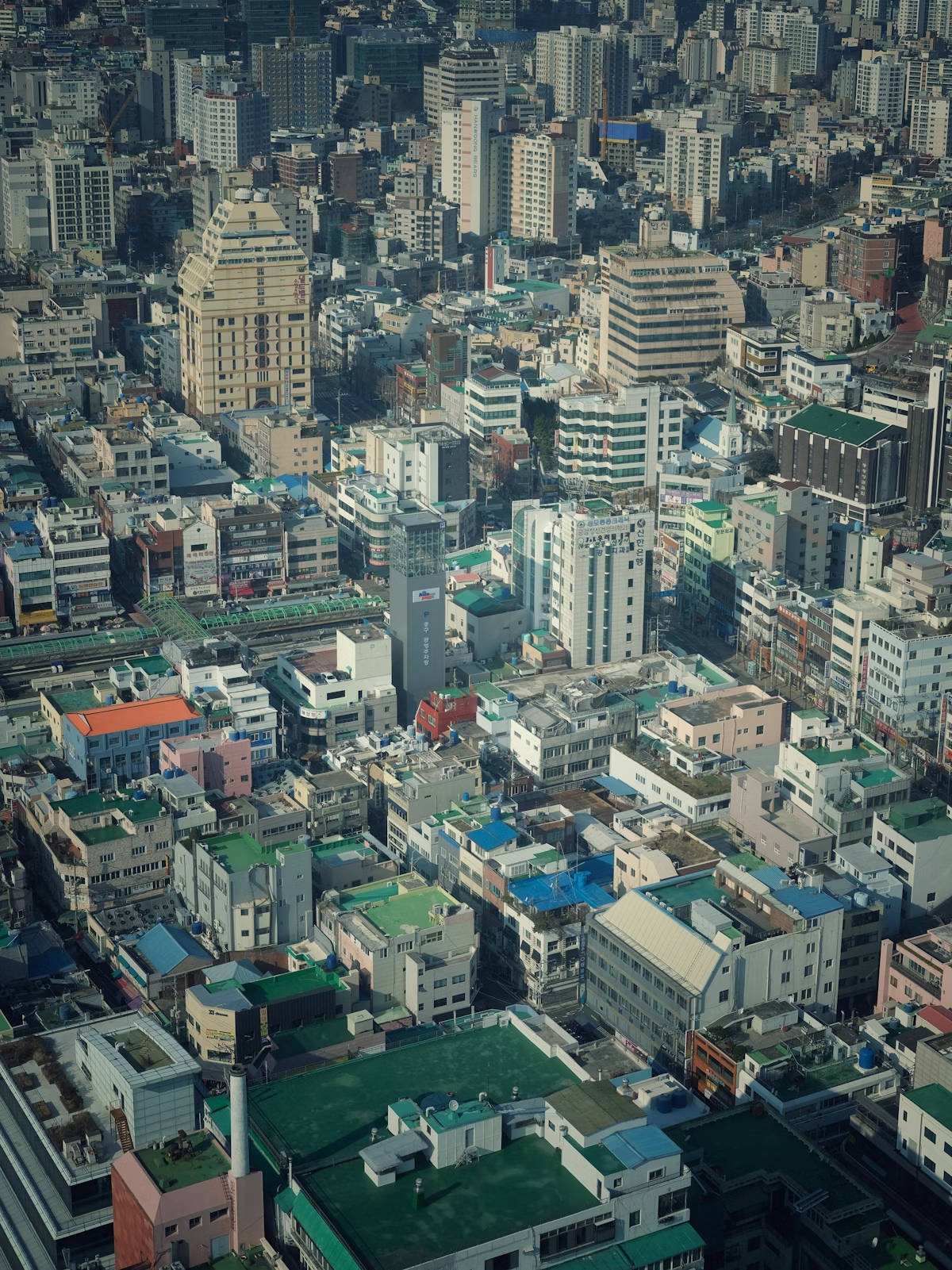
If Seoul is the face of Korea, Busan is where you hear the country’s heartbeat. Korea’s second-largest city and busiest port wraps beaches, cliff-top temples, rainbow hillside villages, and some of Asia’s best seafood into a single destination. From Haeundae (해운대) beach and the neon glow of Gwangalli (광안리) to the painted alleys of Gamcheon Culture Village (감천문화마을) and the seaside prayer halls of Haedong Yonggungsa (해동용궁사, a coastal Buddhist temple), Busan rewards every day of exploration. A KTX ride of roughly two and a half hours from Seoul drops you at Busan Station, and the adventure begins.
Video: “10 Best Things To Do In Busan” by World Wild Hearts
1. Cultural and Historic Spaces
Busan’s appeal goes far beyond its beaches. Scattered across the city are cultural quarters and historic landmarks that add real depth to any visit.
1-1. Gamcheon Culture Village — Korea’s Santorini
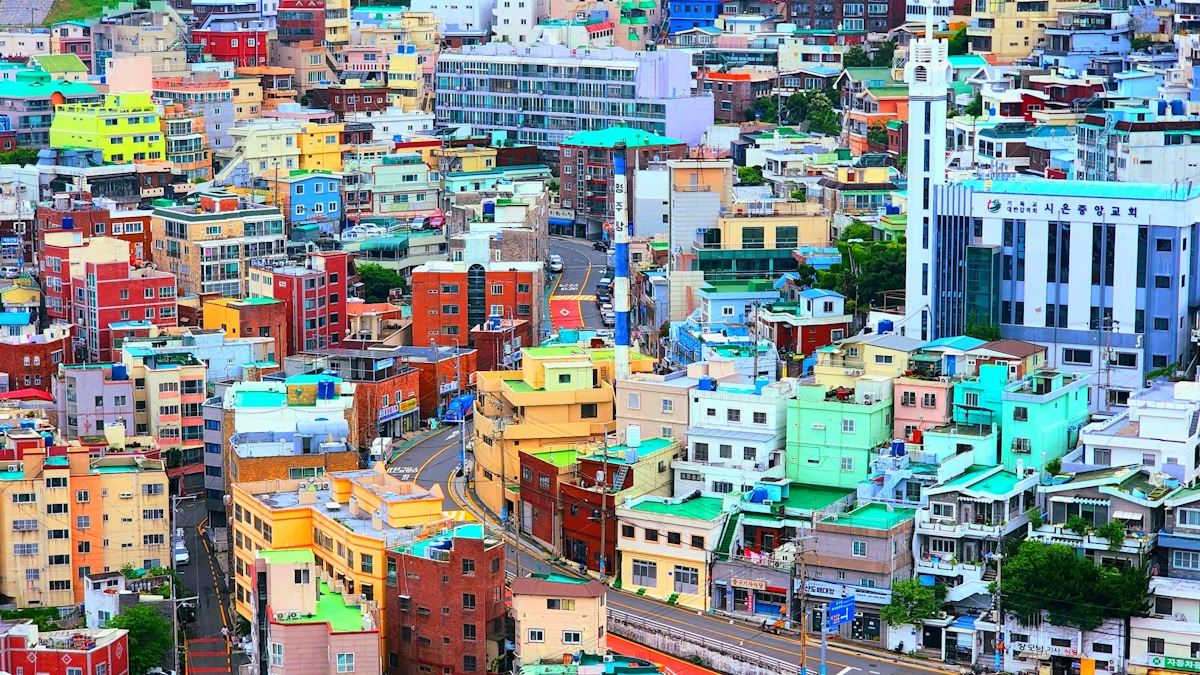
Gamcheon Culture Village (감천문화마을, a hillside neighborhood of pastel-painted houses in Busan’s Saha-gu district) began as a settlement for refugees who fled here during the Korean War. Nicknamed “Korea’s Machu Picchu” and “Busan’s Santorini,” the village draws visitors with its layers of brightly colored houses cascading down toward the sea. After a public art project in 2009 filled the alleys with murals and sculptures, Gamcheon quickly became one of Busan’s essential stops.
The most photographed spot is the Little Prince and the Fox sculpture (2012, by artist Na In-ju), perched where the full village panorama and ocean unfold behind you — expect a queue. A BTS Jimin-and-Jungkook mural photo zone also draws international fans. In March 2026, the Little Prince House (리틀프린스하우스), a four-story exhibition approved by the Saint-Exupery Foundation, opened; allow 30 to 40 minutes.
Admission to the village is free, and it is open from 09:00 to 18:00. Pick up a stamp-tour map for 2,000 KRW (~$1.40 USD) at the entrance and choose from Course A (40 minutes), Course B (1 hour 20 minutes), or Course C (2 hours). Collect all 12 stamps and you receive a postcard as a souvenir.
💡 Local Tip (via “봄바람찔레”‘s blog): The village is built on steep slopes, so comfortable sneakers are a must. If you are coming by public transit, exit Toseong Station (토성역) at Exit 6 and take Saha 1-1 or Seogu 2-2 bus — it stops right at the village entrance.
1-2. Haedong Yonggungsa — A Temple on the Water’s Edge
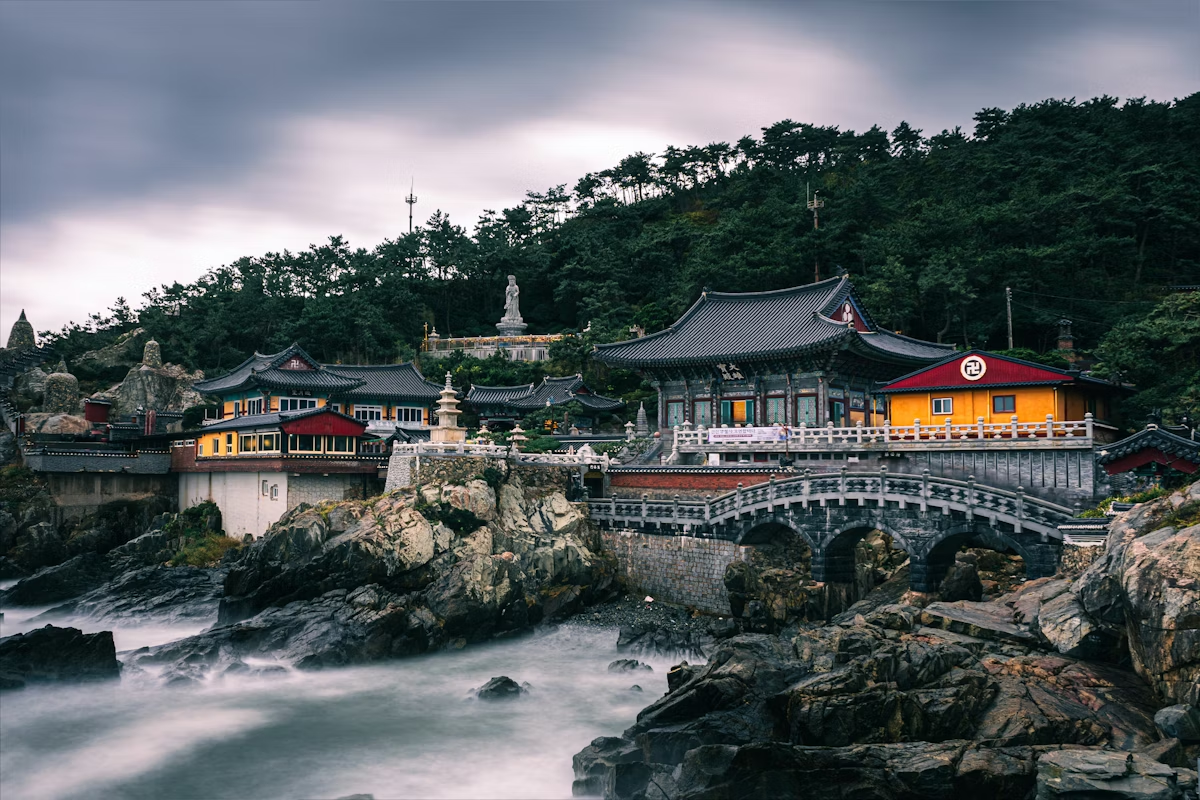
Haedong Yonggungsa (해동용궁사, literally “Dragon Palace Temple of the Eastern Sea”) was founded in 1376 during the Goryeo dynasty by monk Naong Hyegeun. Its seaside setting lets you pray with waves crashing just meters away. The highlight is the view from the roughly 10-meter-tall Haesugwaneum-daebul (해수관음대불, a large seaside Bodhisattva statue) platform, where the temple complex spreads out below. Do not miss Sirangdae (시랑대), a scenic overlook reached by a short deck stairway near the main gate.
Admission is free. Visiting hours are 04:40 to 20:30, year-round. Parking starts at 2,000 KRW (~$1.40 USD) for the first 30 minutes, then 500 KRW (~$0.35 USD) per additional 10 minutes.
1-3. Taejongdae — Coastal Cliffs with a View of Japan
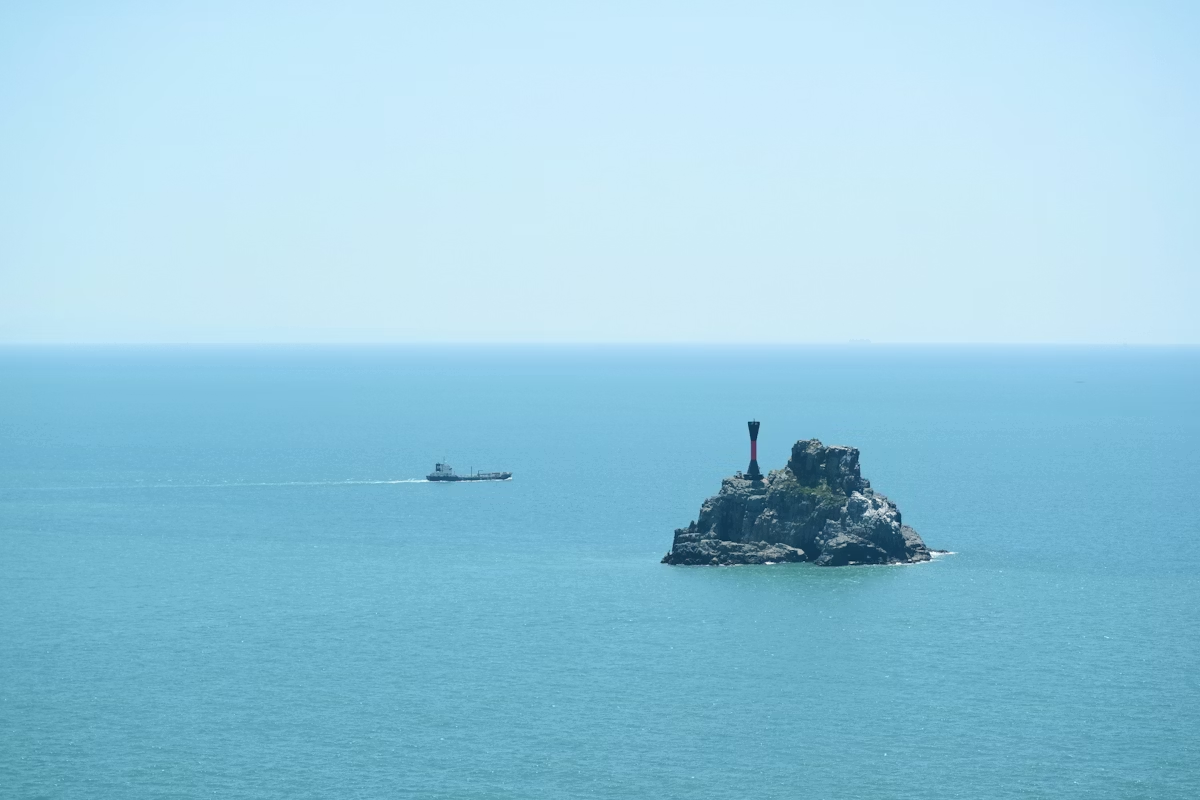
Taejongdae (태종대, a scenic coastal park on Yeongdo Island) is famous for its sheer sea cliffs and ocean views. The circular road stretches about 4 km and takes over two hours on foot, so the Danubi Train (다누비열차, a sightseeing trolley; 4,000 KRW / ~$2.85 USD for the loop) is the efficient way to cover the observatory, Yeongdo Lighthouse, and Taejongsa Temple. On clear days, the Japanese island of Tsushima is visible. Hours: 09:20 to 18:30 (April to September), 09:00 to 17:30 (October to March); closed Mondays.
1-4. Huinyeoul Culture Village — Yeongdo’s Hidden Gem
Huinyeoul Culture Village (흰여울문화마을, a cliffside village in Yeongdo-gu, Yeongseon-dong) sits on a steep slope above the sea and gained fame as a filming location for the Korean movie The Attorney (변호인). The coastal tunnel photo zone draws a steady stream of visitors, and strolling the narrow alleys rewards you with sudden ocean vistas at every turn.
Video: “Busan Ultimate Travel Guide” by Lost Then Found
💡 Local Tip (via “Strong Star”‘s blog): The stairs at Huinyeoul are extremely steep. Get off at the Baengnyeonsa bus stop and head toward the tunnel photo zone first — that way you walk downhill through the village and avoid a brutal climb at the end. Heeled shoes are a definite no.
2. Signature Foods
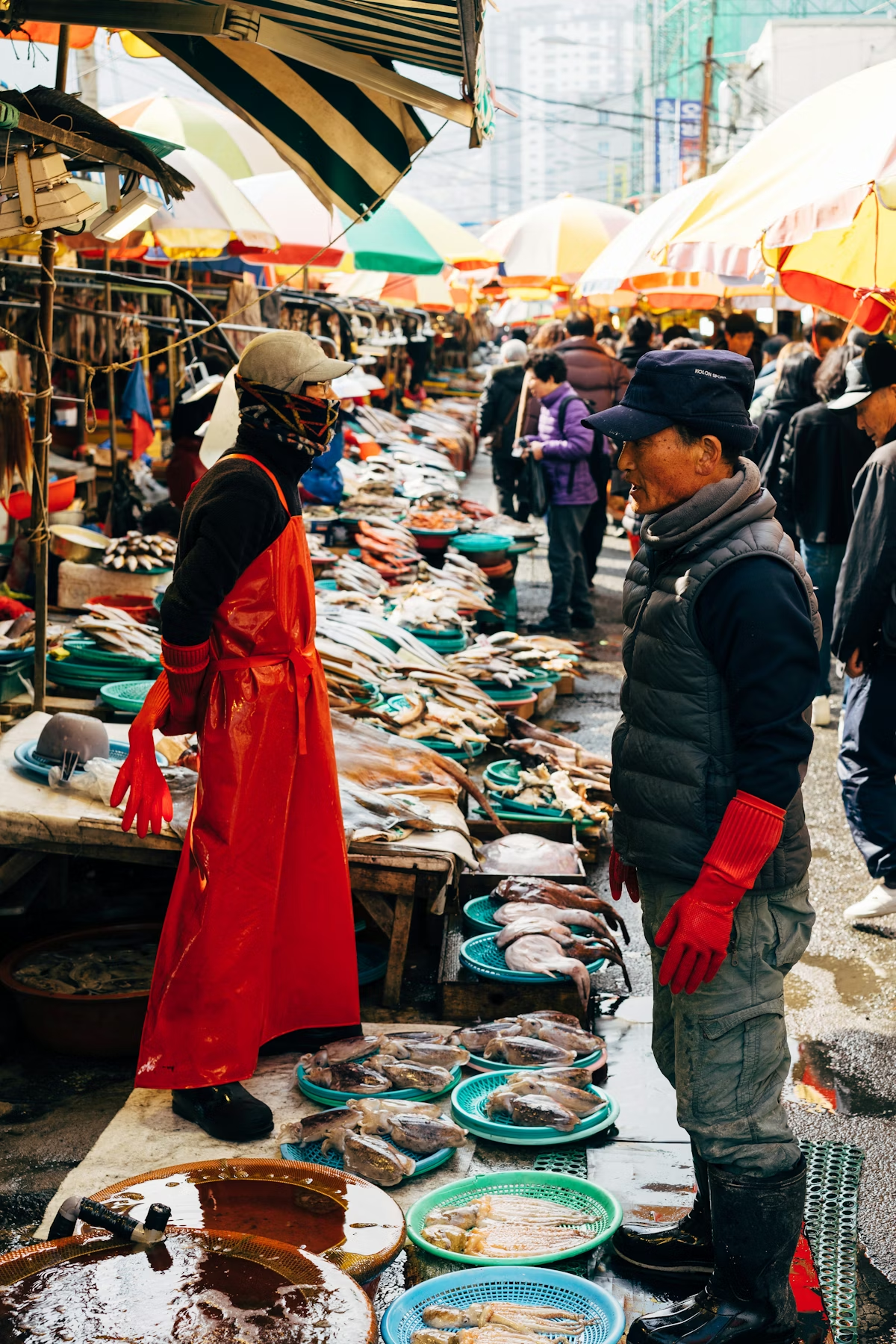
Busan is a port city, and its food reflects that: abundant seafood meets hearty local specialties like milmyeon (밀면) and dwaeji-gukbap (돼지국밥). Leave without eating your way through its markets and you have missed half the trip.
2-1. Dwaeji-gukbap — Busan’s Soul Food
Dwaeji-gukbap (돼지국밥, a rich pork-bone broth soup with sliced boiled pork and rice) is the dish that opens a Busan morning. Whether you need a hangover cure or simply a filling start to the day, a steaming bowl delivers.
- Subyeon Choego Dwaeji-gukbap (수변최고돼지국밥) — One of the most popular dwaeji-gukbap restaurants in Busan right now. The Haeundae branch sees plenty of international visitors. The standout order is the hangjeong-gukbap (항정국밥, soup with premium pork jowl), which arrives loaded with generous slices of meat. The kimchi gets high marks, though the cubed radish kimchi (kkakdugi) divides opinions.
2-2. Milmyeon — A Noodle Dish You Can Only Find in Busan
Milmyeon (밀면, wheat-flour noodles served cold in chilled broth or mixed with a spicy sauce — Busan’s local twist on naengmyeon) resembles cold buckwheat noodles but carries Busan’s own personality. Try the broth version (mul-milmyeon, 물밀면) for something refreshing, or the mixed version (bibim-milmyeon, 비빔밀면) for a spicy kick.
- Choryang Milmyeon (초량밀면) — Mul-milmyeon 7,000 KRW (~$5 USD), bibim-milmyeon 8,000 KRW (~$5.70 USD). Widely cited as one of the definitive milmyeon spots in Busan.
2-3. Seafood and Market Eats
Jagalchi Market (자갈치시장, Korea’s largest seafood market) is where freshly caught fish becomes sashimi right before your eyes. The second floor is lined with raw-fish restaurants where you pick your live catch and have it sliced on the spot.
In the Gijang (기장) area near Haedong Yonggungsa, snow crab (대게, daege) is the star. A popular itinerary pairs a morning temple visit with a crab feast — complete with crab-shell fried rice (게딱지볶음밥) — at one of the restaurants along Gijang’s coastal road.
Haeundae Market (해운대시장) serves street-food staples like haemul-pajeon (해물파전, seafood-and-scallion pancake; about 10,000 KRW / ~$7.15 USD), while Millak the Market (밀락더마켓) on the Gwangalli waterfront gathers food-truck-style vendors under one roof for a casual, market-hall dining experience.
Video: “부산여행 브이로그” by 프롬지나 fromjina
💡 Local Tip (via “이제남 변호사”‘s blog): Busandang (부산당) is a trending bakery in Haeundae — the salt bread (소금빵) is the must-try. The outside stays crispy and the inside stays moist, even after it cools.
2-4. Ijae-mo Pizza — The Pizza Worth a Train Ride
Ijae-mo Pizza (이재모피자) has a cult following so devoted that some Seoul residents ride the KTX down just for a pie. The draw is generous, old-school-style large pizzas and a fried-rice side. Warning: weekend waits can exceed two hours, and even weekdays see long lines.
3. Cafes and Accommodation
3-1. Ocean-View Cafes at Huinyeoul Village
Lisboa (리스보아) — 198 Jeolyeong-ro, Yeongdo-gu. A two-story cafe with floor-to-ceiling ocean views. The blueberry croffle and the signature Lisboa latte are the popular orders. Open Monday through Thursday and Sunday 09:00 to 21:30, Friday and Saturday 09:00 to 23:00, year-round.
Yeoul Chaekjang (여울책장, meaning “Yeoul Bookshelf”) — A cozy ocean-view book cafe in a yellow building beside the rainbow staircase on Huinyeoul-gil. The outdoor terrace offers wide-open sea views, and the mango bingsu (망고빙수, shaved-ice dessert with mango) is the crowd favorite.
3-2. Gamcheon Culture Village Cafe
Asteroid B612 (소행성 B612) — Nestled near the Little Prince photo zone inside Gamcheon Culture Village. The second floor delivers a panoramic view stretching from the village rooftops to the sea beyond, making it the ideal rest stop after all those hills.
3-3. Jeonpo-dong Cafe Street
Jeonpo-dong (전포동) is Busan’s premier neighborhood for indie cafes and vintage shops. Eat In All To Go (잇인올투고) serves creative items like tomato sorbet, decaf drip coffee, and an Oreo towel cake. One heads-up: many bakeries in this district close on Wednesdays, so if a bakery pilgrimage (빵지순례) is on your agenda, avoid that day.
3-4. Where to Stay
- Haeundae ocean-view stays — Hotels and guesthouses along Haeundae Beach (해운대해변) offer floor-to-ceiling ocean panoramas. Book rooms with a view early — they sell out fast.
- Gwangalli stays — Choose a spot facing the Gwangan Bridge (광안대교, also called Diamond Bridge) and you can watch the bridge light up from your room each night.
4. Practical Tips
Getting There
- Seoul to Busan: The KTX takes roughly 2 hours and 30 minutes, arriving at Busan Station (부산역). Forward-facing seats fill up quickly, so book ahead.
- Gimhae Airport to downtown: Take the light-rail line and transfer to the subway, or ride a limousine bus directly to major districts.
- Getting around the city: Busan’s four subway lines connect most major attractions. A one-day transit pass (부산 1일권 교통카드) costs 5,000 KRW (~$3.55 USD) and gives unlimited rides on subway and bus all day.
Best Seasons
- Spring (March to May): Cherry blossoms frame the sea. Huinyeoul Culture Village and the magnolia paths at Taejongdae are especially beautiful.
- Summer (June to August): Peak beach season — Haeundae and Gwangalli come alive. Hydrangeas at Taejongdae in July are a bonus.
- Autumn (September to November): Mild weather ideal for walking. The Igidae (이기대) Coastal Trail is a favorite.
- Winter (December to February): Fewer crowds but biting sea winds. Dress warmly if you plan a yacht tour.
Night Views
The crown jewel of Busan after dark is Gwangan Bridge (광안대교, nicknamed Diamond Bridge). After about 8 PM the bridge lights up, casting a shimmering reflection across the water. Millak Waterfront Park (민락수변공원) is the locals’ favorite viewpoint. For a more dramatic perspective, try a yacht tour from Suyeong Yacht Center (수영요트경기장) — the route passes under the bridge, and some tours include a fireworks show.
Video: “Busan 2026 Travel Guide” by Budget Travel Vlog
Map Apps
Google Maps has limited detail inside Korea. For finding cafes, restaurants, and walking routes, Naver Map (네이버 지도) or KakaoMap (카카오맵) are far more accurate. Both apps support English interfaces.
Payment
Cards are accepted at most restaurants, cafes, and convenience stores. Smaller market stalls may require cash, so keep a small amount of Korean won on hand.
💡 Local Tip (via “코드뽑아2″‘s blog): Gwangalli Beach is a 7-minute walk from Geumnyeonsan Station (금련산역, Subway Line 2). Visit after 8 PM for the best bridge lighting. While you are in the neighborhood, the bakery street in Namcheon-dong (남천동, known as “Bbangcheon-dong” — a pun on “bread town”) is within walking distance and worth a detour.
Video: “Top 10 Things to do in Busan” by The Seoul Scene
5. A City That Keeps Calling You Back
Busan is not a city you can absorb in a single visit. A morning walk along Haeundae Beach, getting lost in the painted alleys of Gamcheon, sashimi and soju at Jagalchi Market, then watching Gwangan Bridge light up from the deck of a yacht — even after a day like that, Busan has more to show you tomorrow.
In spring, stroll beneath cherry blossoms at Huinyeoul Village. In summer, let the waves at Haeundae carry away the heat. In autumn, follow the Igidae coastal path with the sea stretching to the horizon. In winter, warm yourself with a bowl of dwaeji-gukbap so hearty it melts the cold from your bones. Busan is the kind of city that calls you back with every change of season.
Sources & References
This guide was curated from the following Korean-language sources:
Blogs & Articles
– “부산 여행기” by 이제남 변호사 — https://blog.naver.com/leejenam_lawyer/224234997601
– “감천문화마을 + 다대포” by 곰이팡이 — https://blog.naver.com/wlghks3544/224234955651
– “감천문화마을 뚜벅이 대중교통” by 봄바람찔레 — https://blog.naver.com/bombaramjjille/224220144117
– “감천문화마을 리틀프린스하우스” by 디아 — https://blog.naver.com/aug_d_travel/224225105656
– “해동용궁사 여행” by 언제나 여행 중 — https://blog.naver.com/rambo3/222610224217
– “해동용궁사 소원 명소” by 밍밍이 — https://blog.naver.com/lisa7979/224218901988
– “태종대 다누비열차” by 모찌 — https://blog.naver.com/myrtle-/224212225232
– “흰여울마을 동굴포토존” by Strong Star — https://blog.naver.com/kstar5154/223298416932
– “부산 2박3일 여행” by 대파리 — https://blog.naver.com/daefari/224248908383
– “흰여울마을 카페 리스보아” by 오늘만 — https://blog.naver.com/yss7809/224206640574
– “흰여울마을 카페 여울책장” by 야미미자매 — https://blog.naver.com/yummymmmm/224175190737
– “감천문화마을 소행성 카페” by 야무진 김주부 — https://blog.naver.com/gumdan_newcity/223860450488
– “요트 투어 내돈내산 후기” by 소금별 보라공주 — https://blog.naver.com/sstar_bora/224169942283
– “부산 숨은 명소 & 찐맛집 가이드” by 여행구구 — https://tripgugu.tistory.com/entry/2025-부산-숨은-명소-찐맛집-가이드
– “광안리 완벽 여행 가이드” by 코드뽑아2 — https://rysgirl0126.tistory.com/entry/2025년-부산-광안리-완벽-여행-가이드-핫플레이스-맛집-총정리
Videos
– “10 Best Things To Do In Busan” by World Wild Hearts — https://www.youtube.com/watch?v=cTRRbFtPViI
– “Busan Ultimate Travel Guide” by Lost Then Found — https://www.youtube.com/watch?v=NQ8nYQt4hlc
– “부산여행 브이로그” by 프롬지나 fromjina — https://www.youtube.com/watch?v=ArsD-0J9tbM
– “Busan 2026 Travel Guide” by Budget Travel Vlog — https://www.youtube.com/watch?v=9BbW3AUKosA
– “Top 10 Things to do in Busan” by The Seoul Scene — https://www.youtube.com/watch?v=DnzHBOdxwQA
Images
– Photo by David Zhang on Unsplash — https://unsplash.com/photos/5tC7mPvXpzI
– Photo by Jeong Yejune on Unsplash — https://unsplash.com/photos/Rabe_9WZo9M
– Photo by Dmitry Voronov on Unsplash — https://unsplash.com/photos/_s7lmHcNyDM
– Photo by Cheolmin Kim on Unsplash — https://unsplash.com/photos/EcWlBfm1HSQ
– Photo by Markus Winkler on Unsplash — https://unsplash.com/photos/Bo5_MYlMM1g
– Photo by JHANY BLUE on Unsplash — https://unsplash.com/photos/kH9bC-ru3Kc
All content has been summarized and adapted for international readers. Original authors retain full copyright of their work.