
This guide was curated from 6 Korean-language blog posts, 8 YouTube videos, and 12 Unsplash photographs, then reimagined for international travelers. Full attributions are listed at the bottom of this article.
There’s a reason people call Gunsan (군산) “the city of time travel.” Colonial-era buildings from the Japanese occupation period still stand intact throughout the city, and walking its streets can feel like stepping back into a day in the 1930s. Here you’ll find the setting of Chae Man-sik’s novel Takryu (탁류, “Muddy Waters”), the glass storefront of the Chowon Photo Studio from the film Palwol-ui Keuriseumaseu (8월의 크리스마스, “Christmas in August”), and the quiet grounds of Dongguksa (동국사) — Korea’s only Japanese-style Buddhist temple. Add to that a city-wide obsession with jjamppong (짬뽕, Chinese-style spicy seafood noodle soup) and Korea’s oldest surviving bakery, and you have a rare destination where history and food share a single walking route.
Video: “나 혼자 군산 1박 2일 여행 Vlog” by YouTube creator
1. Colonial Heritage and Historic Spaces — Layers of Time on Foot
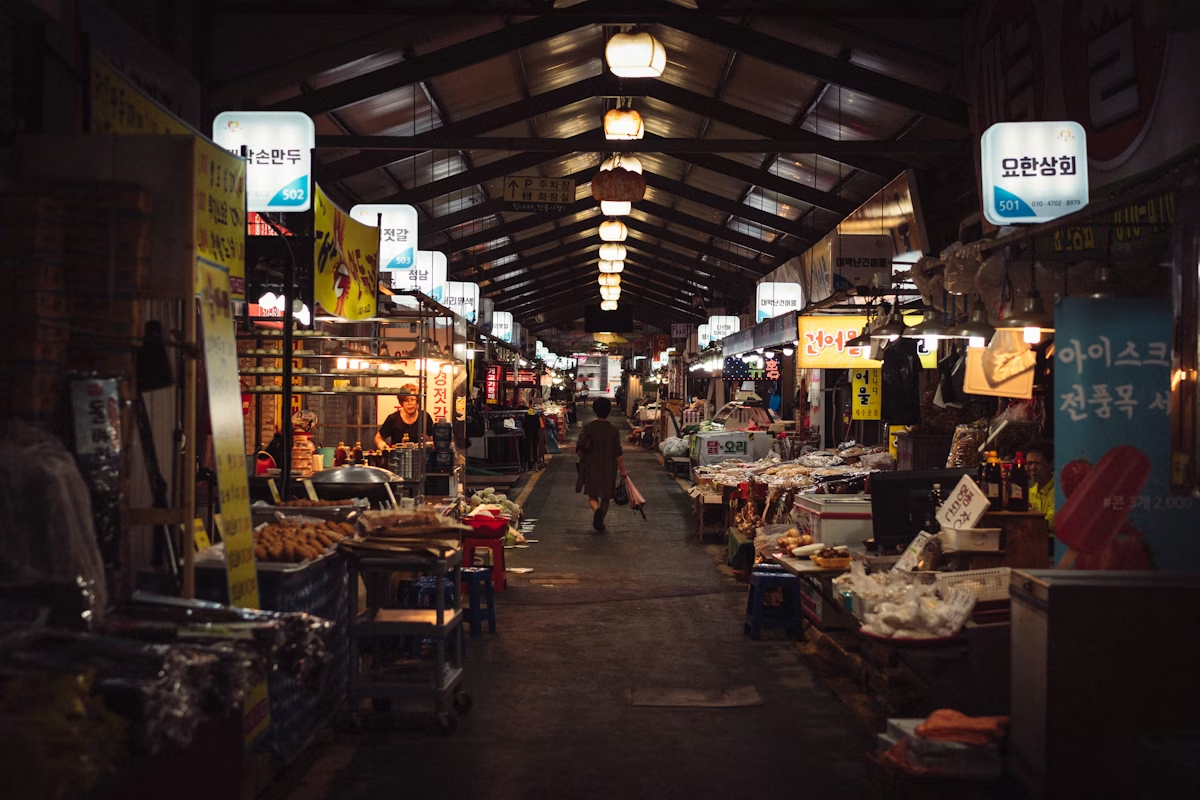
Most of Gunsan’s modern-history landmarks sit within a 1 km radius of each other, so half a day is enough to cover the essentials. The city runs a Stamp Tour combined ticket for just 3,000 KRW (about $2.10 USD), granting discounted access to eight or nine sites along the route.
Gunsan Modern History Museum (군산근대역사박물관) is the natural starting point. Its exhibits vividly recreate daily life during the 1930s Japanese colonial period, with artifacts and historical materials carefully organized by era. Nearby, the Old Gunsan Customs House (구 군산세관 본관) is considered one of Korea’s three great examples of Western classical architecture. Its red-brick exterior makes for an excellent photograph.
Hiroesu House (히로쓰가옥, formally Sinheung-dong Japanese-style House, Registered Cultural Property No. 183) is a Japanese wooden residence with its tatami rooms and Japanese garden preserved as they were. It also served as a filming location for the Korean movie Janggun-ui Adeul (장군의 아들, “The General’s Son”) — a nice bonus for Korean film fans.
Chowon Photo Studio (초원사진관) is the actual filming location of the beloved Korean film Palwol-ui Keuriseumaseu (8월의 크리스마스, “Christmas in August”), where actor Han Suk-kyu ran a small photo shop. Posing for a photo next to the Tico car parked out front has become something of a visitor ritual.
Dongguksa (동국사, Registered Cultural Property No. 64) is the only Japanese-style Buddhist temple remaining in Korea. A memorial stele in its grounds commemorates the painful history of the colonial period, and the temple’s stillness makes it a good place for quiet reflection.
Gyeongam-dong Railroad Village (경암동 철길마을) stretches along roughly 400 meters of disused railway track. The old buildings from the 1970s are now home to murals, nostalgia-themed souvenir shops, and even a dalgona (달고나, Korean sugar candy) making experience. The village sits across from Emart Gunsan, where free parking is available.
💡 Local Tip (via “Travollor”‘s blog): The Fun Village Cooperative near the stamp tour route offers luggage storage and 1930s costume rental. Drop off your bags, change into period clothing, and the stamp tour becomes twice as fun.
Video: “나혼자 군산 여행 따라하고픈 뚜벅이코스” by YouTube creator
2. The Food — A Jjamppong Paradise (and Beyond)
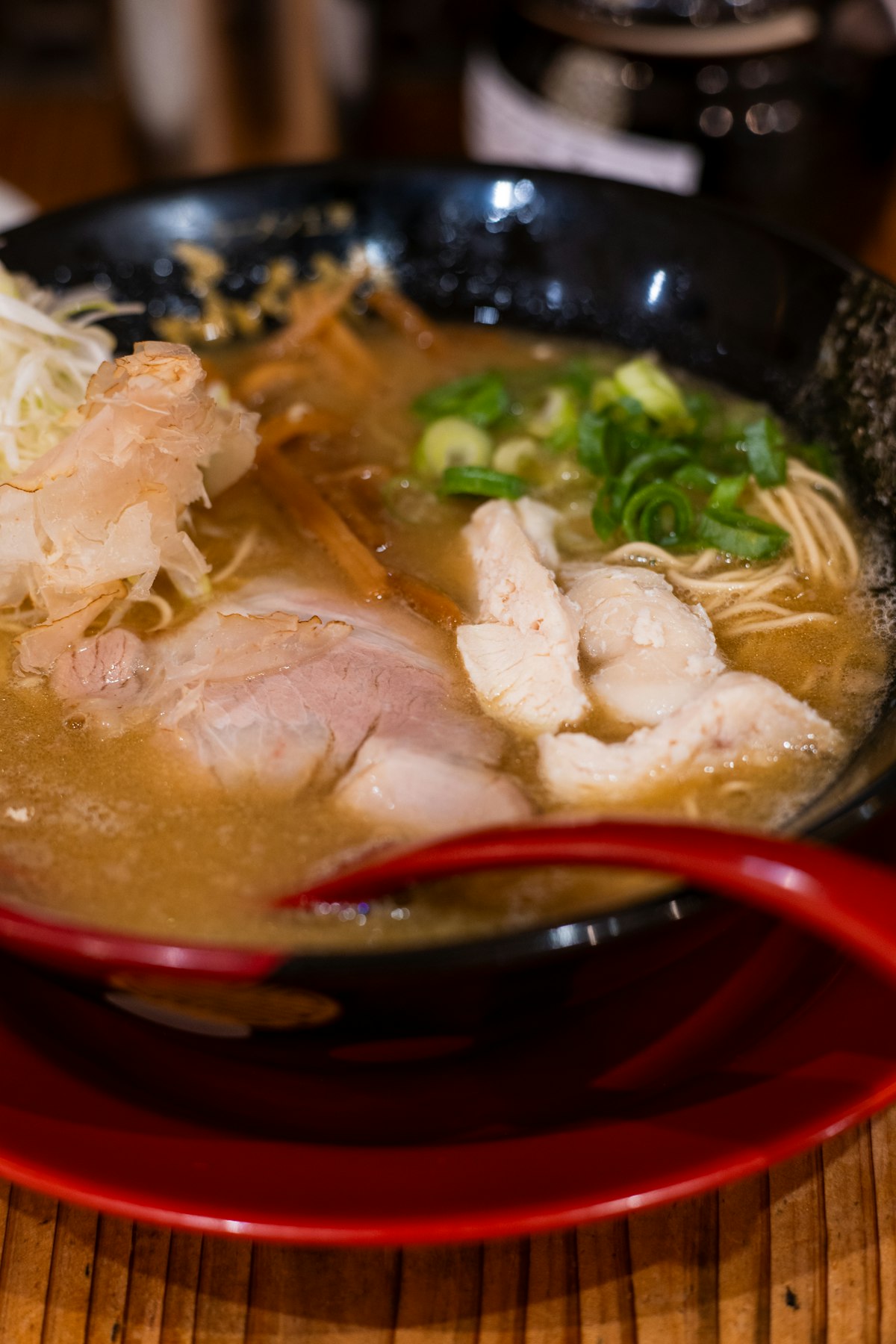
Gunsan has an entire street dedicated to jjamppong shops — that’s how seriously this city takes its noodle soup. Layer on Korea’s oldest surviving bakery, a dawn-opening beef bibimbap institution, and a soy-marinated crab specialist, and you have a food-travel destination that punches well above its size.
2-1. Jjamppong — The bowl that defines Gunsan
Gunsan’s Big Five jjamppong restaurants are Bokseongru, Jirinseong, Binhaewon, Susong Banjeon, and Wangsan Chinese Restaurant.
- Bokseongru (복성루) — Featured three times on Saenghwal-ui Dallin (생활의 달인, a popular Korean TV show spotlighting everyday masters of their craft). Known for its rich seafood broth.
- Jirinseong (지린성) — Signature dishes are the spicy pepper jjajang and pepper jjamppong, each 11,000 KRW (about $7.90 USD). Has appeared on Na Honja Sanda (나 혼자 산다, “I Live Alone”) and Baekjongwon-ui 3-dae Cheonwang (백종원의 3대 천왕, “Baek Jong-won’s Top 3 Chefs”).
- Binhaewon (빈해원) — Located on jjamppong specialty street. Jjamppong 8,000 KRW (about $5.70 USD), jjajangmyeon 6,000 KRW (about $4.30 USD) — honest prices.
- Susong Banjeon (수송반점) — Seafood jjamppong 10,000 KRW (about $7.10 USD), sweet potato jjajang 7,000 KRW (about $5.00 USD). The sweet potato jjajang is a hit with kids.
- Wangsan Chinese Restaurant (왕산중화요리) — Bean-sprout jjamppong 10,000 KRW (about $7.10 USD). Made headlines when TV personality Lee Sang-min visited on Miun Uri Saekki (미운 우리 새끼, “My Little Old Boy”).
2-2. Iseongdang — Korea’s Oldest Bakery
Iseongdang (이성당) is a non-negotiable stop on any Gunsan trip. Counted among Korea’s “Big Five” bakeries, its signature danpatppang (단팥빵, sweet red-bean bread) and yachae-ppang (야채빵, savory vegetable bread) cost just 2,000 KRW each (about $1.40 USD) and can only be purchased at the main building. Even at peak times, the wait is usually 20 to 30 minutes — worth every minute.
2-3. More must-try restaurants
- Hanilok (한일옥) — Yukhoe-bibimbap (raw beef bibimbap) 11,000 KRW (about $7.90 USD), beef radish soup 10,000 KRW (about $7.10 USD). Opens at 6 AM, making it perfect for an early breakfast.
- Jjaebo Sikdang (째보식당) — Soy-marinated assorted set 38,000 KRW for two (about $27 USD). A full spread of soy-marinated flower crab, shrimp, and abalone arrives at your table.
- Jangmi Kalguksu (장미칼국수) — 40 years of tradition. Kalguksu (hand-cut wheat noodles) 9,000 KRW (about $6.40 USD). Also featured on Saenghwal-ui Dallin.
💡 Local Tip (via “Badamun”‘s blog): Most Gunsan jjamppong restaurants open at 11 AM and close by 2-3 PM when ingredients run out. Arriving between 11:00 and 11:30 is the surest way to avoid long waits.
Video: “군산 맛집 카페만 다녀온 하루 군산 여행 브이로그” by YouTube creator
3. Cafes and Desserts — Coffee Inside Colonial-Era Walls
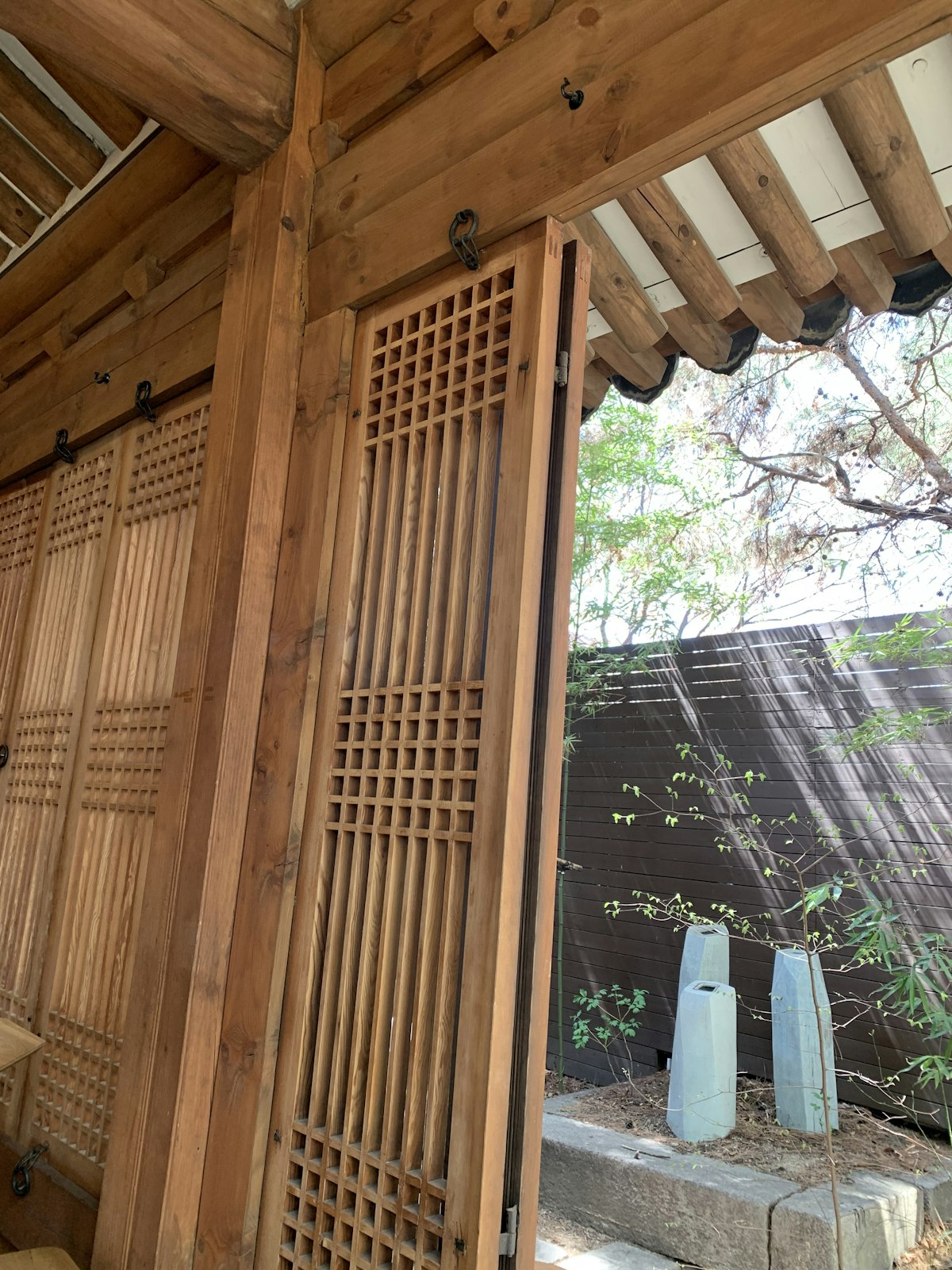
Gunsan’s cafe culture feels different from other Korean cities. Sipping coffee inside a renovated Japanese colonial-era building is itself a travel experience.
Miz Coffee (미즈커피, housed in the former Miz Trading Company building) puts its colonial origins on full display. High ceilings and weathered wooden floors extend the mood of Gunsan’s historic streets right into your coffee break.
Heukbaek Sajingwan Kimchi (흑백사진관 김치, “Black & White Photo Studio Kimchi”) doubles as a cafe and a black-and-white portrait studio. For 5,000 KRW (about $3.60 USD) per print, you can take home a moody 1930s-style portrait — a uniquely Gunsan souvenir.
Munyeo-2-gu Maeul Bus (무녀2구 마을버스) sits by the ocean on the way to Seonyudo (선유도, an island in the Gogunsan Archipelago). The space was built from a repurposed bus and shipping containers, and eating a handmade burger while watching the waves is a memorable experience.
Video: “단돈 10만원으로 하는 군산 여행은 어떨까?” by YouTube creator
4. Practical Tips — Making Your Gunsan Trip Smoother
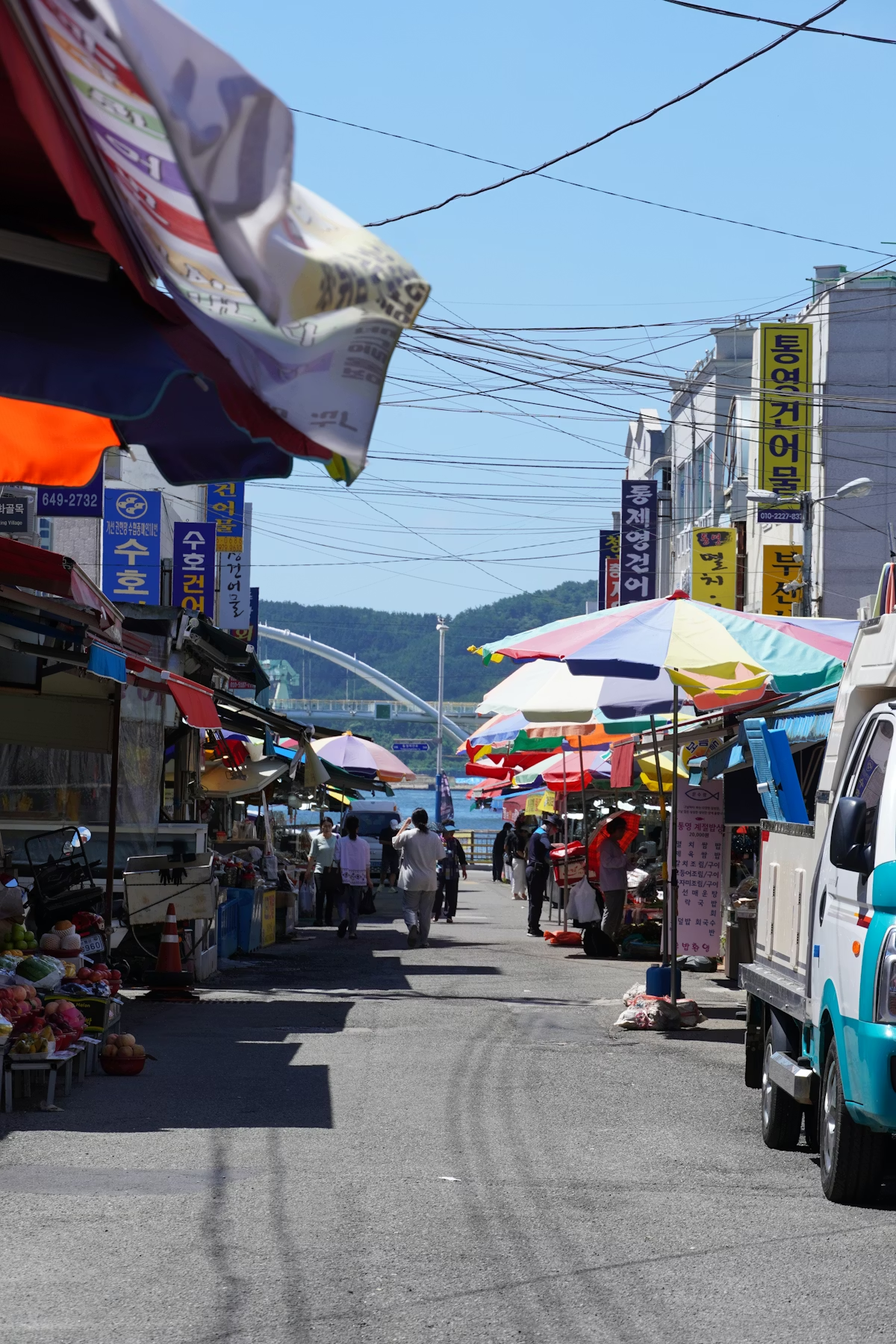
Getting there
From Seoul to Gunsan: The KTX (Korea Train eXpress) from Yongsan Station takes about 2 hours. Express buses from Central City Terminal take roughly 2 hours and 30 minutes.
Getting around the city: The historic district is almost entirely walkable. For outlying attractions like Seonyudo or the Saemangeum Seawall, renting a car is the most convenient option.
Stamp Tour combined ticket
The Gunsan Modern Port Stamp Tour ticket costs 3,000 KRW (about $2.10 USD) and covers eight or nine sites including the Modern History Museum — excellent value.
Best seasons
- Spring (April-May) and autumn (September-October): Ideal weather for strolling the historic streets. The Seonyudo coast is also pleasant.
- Summer (June-August): Good for Seonyudo beach swimming and mudflat experiences, but downtown walking tours can be hot.
- Winter (December-February): Fewer tourists and a quiet atmosphere, but strong sea winds mean you’ll need warm layers.
Payment and maps
Most restaurants and cafes accept cards, but cash is more convenient at Railroad Village street vendors and traditional markets. For navigation, use Naver Map or KakaoMap — Google Maps has limited detail in Korea.
Seonyudo island trip
Seonyudo (선유도), the central island of the Gogunsan Archipelago (고군산군도), is accessible by car via the Saemangeum Seawall (새만금방조제) — at 33.9 km, the world’s longest seawall and a Guinness World Record holder. The Myeongsasimni beach stretches about 1.5 km, and renting a bicycle lets you circle the entire island in an hour. At low tide, the Jwittongseom Moses Path (쥐똥섬 모세길) reveals a walkable sea path — time your visit at sunrise for a truly spectacular view.
💡 Local Tip (via “Gwanghwamun-deok”‘s blog): Iseongdang’s danpatppang and yachae-ppang are only sold at the main building. The annex carries a different menu, so even if the line is long, join the main-building queue — that’s where the signature breads are.
Video: “전형적인 관광객 코스로 다녀보는 나홀로 군산 1박 2일” by YouTube creator
5. Where the Muddy Waters Flowed — A City That Chose to Remember
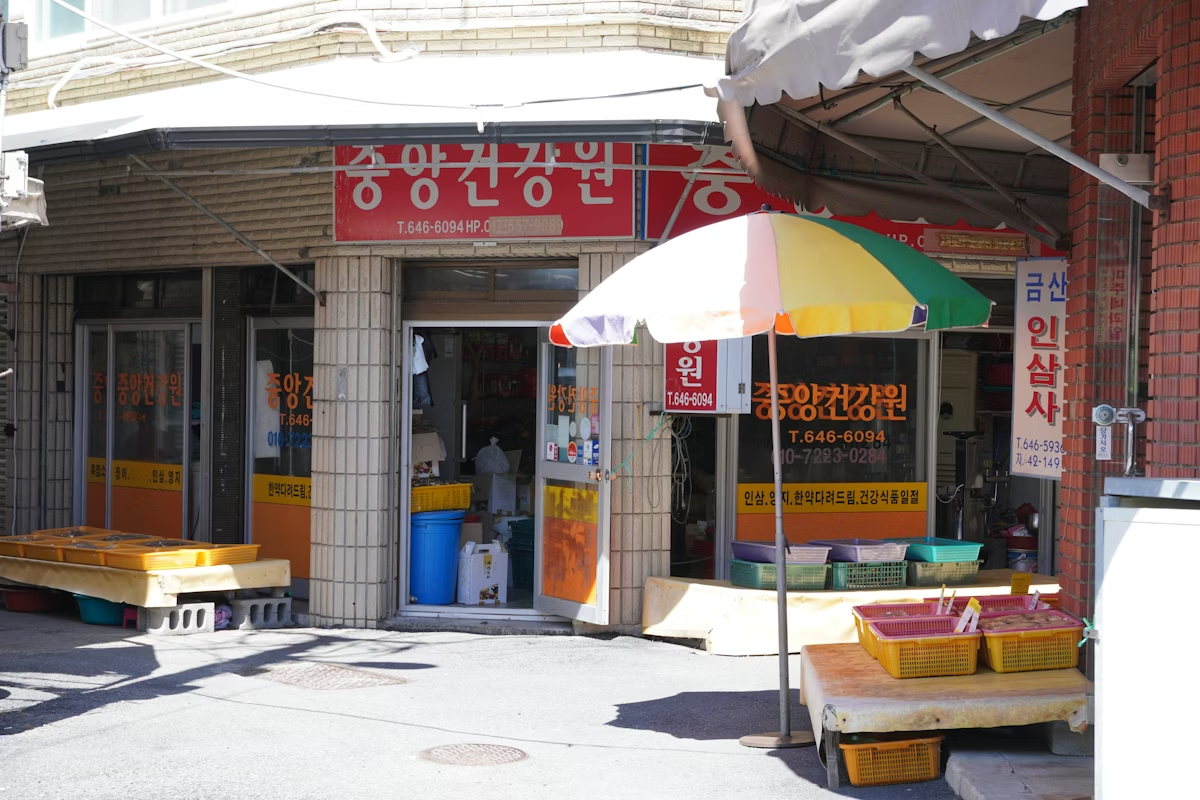
In his novel Takryu, Chae Man-sik used the muddy currents of the Geum River flowing through Gunsan as a metaphor for the pain of an era. Nearly a century later, Gunsan has chosen not to erase those marks of hardship but to preserve them with care. A day that begins at the Modern History Museum, passes through Hiroesu House, Dongguksa, and Chowon Photo Studio, and ends with a warm danpatppang from Iseongdang is a journey that moves between the 1930s and today.
Opening your morning with a steaming bowl of jjamppong, tracing the past along the rails of Railroad Village, and listening to the waves on Seonyudo as evening falls — this is the quiet gift Gunsan offers. For travelers who want something different from the glamour of Seoul or Busan, Gunsan is an honest answer.
You’re already thinking about coming back at dawn to catch the Moses Path at low tide, aren’t you?
Video: “I went on a solo trip to Gunsan” by YouTube creator
Sources & References
This article was curated from the following Korean-language sources:
Blogs
- “군산 맛집 베스트10 추천 2024 플레이스 맛집” by 바다문 (jdblue2022) — https://jdblue2022.tistory.com/entry/%EA%B5%B0%EC%82%B0-%EB%A7%9B%EC%A7%91-%EB%B2%A0%EC%8A%A4%ED%8A%B810
- “군산 가볼만한곳 틈, 꼭 가봐야 할 2024 핫스팟!” by 책잡다 (ohwhathappen) — https://ohwhathappen.tistory.com/entry/%EA%B5%B0%EC%82%B0-%EA%B0%80%EB%B3%BC%EB%A7%8C%ED%95%9C%EA%B3%B3-%ED%8B%88-%EA%BC%AD-%EA%B0%80%EB%B4%90%EC%95%BC-%ED%95%A0-2024-%ED%95%AB%EC%8A%A4%ED%8C%9F
- “군산 여행 팁 가득! 2024년 군산 여름 휴가지 완벽 정복” by 여행자의 발자취 (moneycoch2) — https://moneycoch2.tistory.com/entry/%EA%B5%B0%EC%82%B0-%EC%97%AC%ED%96%89-%ED%8C%81-%EA%B0%80%EB%93%9D-2024%EB%85%84-%EA%B5%B0%EC%82%B0-%EC%97%AC%EB%A6%84-%ED%9C%B4%EA%B0%80%EC%A7%80-%EC%99%84%EB%B2%BD-%EC%A0%95%EB%B3%B5
- “군산 여행코스 버킷리스트 7 가볼만한곳 숙소 호텔 추천” by 건강한 생활습관 (@gogofamily) — https://brunch.co.kr/@gogofamily/4
- “뚜벅뚜벅 군산여행” by 트래볼러 (@yooym2000) — https://brunch.co.kr/@yooym2000/166
- “#9. 시간여행 속으로…’군산'” by 광화문덕 (@eastgo) — https://brunch.co.kr/@eastgo/1201
YouTube videos (embedded with attribution)
- “나 혼자 군산 1박 2일 여행 Vlog” — https://www.youtube.com/watch?v=DyBKFznNG-k
- “나혼자 군산 여행 따라하고픈 뚜벅이코스” — https://www.youtube.com/watch?v=MyXWCQLSjxk
- “군산 맛집 카페만 다녀온 하루 군산 여행 브이로그” — https://www.youtube.com/watch?v=sBXVByOwiUs
- “단돈 10만원으로 하는 군산 여행은 어떨까?” — https://www.youtube.com/watch?v=ynUgjJBrwOU
- “전형적인 관광객 코스로 다녀보는 나홀로 군산 1박 2일” — https://www.youtube.com/watch?v=139l4jRorZc
- “I went on a solo trip to Gunsan” — https://www.youtube.com/watch?v=ydwy78wZms4
Photographs (Unsplash License)
- Photos sourced from Unsplash searches for “gunsan” and “korean-traditional-street” — https://unsplash.com
All content has been summarized and adapted for international readers. Original authors retain full copyright of their work.