
This guide was curated from 4 Korean-language blog posts, 4 YouTube videos, and 6 Unsplash photographs, then reimagined for international travelers. Full attributions are listed at the bottom of this article.
Gyeongju is a place where a thousand years of history rises quietly from the earth. As the capital of the Silla kingdom for nearly 1,000 years, Gyeongju stands today as one of Korea’s most precious cultural repositories—so much so that UNESCO designated three major heritage sites here: Bulguksa Temple, Seokguram Grotto, and the Gyeongju Historic Areas. What makes Gyeongju remarkable is not the individual monuments, but how they sit together in harmony, creating a landscape that feels like walking through an open-air museum. In recent years, international travelers have discovered what Korean locals have long known: Gyeongju rewards both the hurried visitor and the contemplative wanderer.
Video: “📍Gyeongju Korea Travel Guide: 12 Things To Do +Itineraries – Cheomseongdae, Bulguksa, Gyeongju World” by Roseanne Ducut
1. Walking Silla’s Legacy
Gyeongju’s cultural treasures cluster within a 10 km radius, making efficient sightseeing possible for visitors with limited time. Most major landmarks can be reached by bus or taxi, though a full-day taxi tour (about 80,000–100,000 KRW, or $57–71 USD) offers comfortable transportation and flexibility.
Bulguksa Temple (불국사) is the crown jewel of Silla architecture. Built in 751, this temple represents the pinnacle of Buddhist art and engineering from Korea’s golden age. Two iconic stone pagodas—the Seokga-tap (석가탑) and Dabo-tap (다보탑)—dominate the temple grounds, their clean lines and proportions instantly recognizable even to first-time visitors. Walking up the stone steps that Silla monks ascended centuries ago creates an almost physical connection to the past. Admission is around 5,000 KRW (approximately $3.60 USD). One travel blogger described the experience: “The moment your feet touch the same stones that were walked on 1,300 years ago, you feel history not as an abstract concept but as something immediate and present.”
Seokguram Grotto (석굴암) sits on a mountainside above Bulguksa, housing a perfectly preserved seated Buddha gazing toward the East Sea. Most visitors pair it with Bulguksa in a single excursion, making for a full morning or early afternoon.
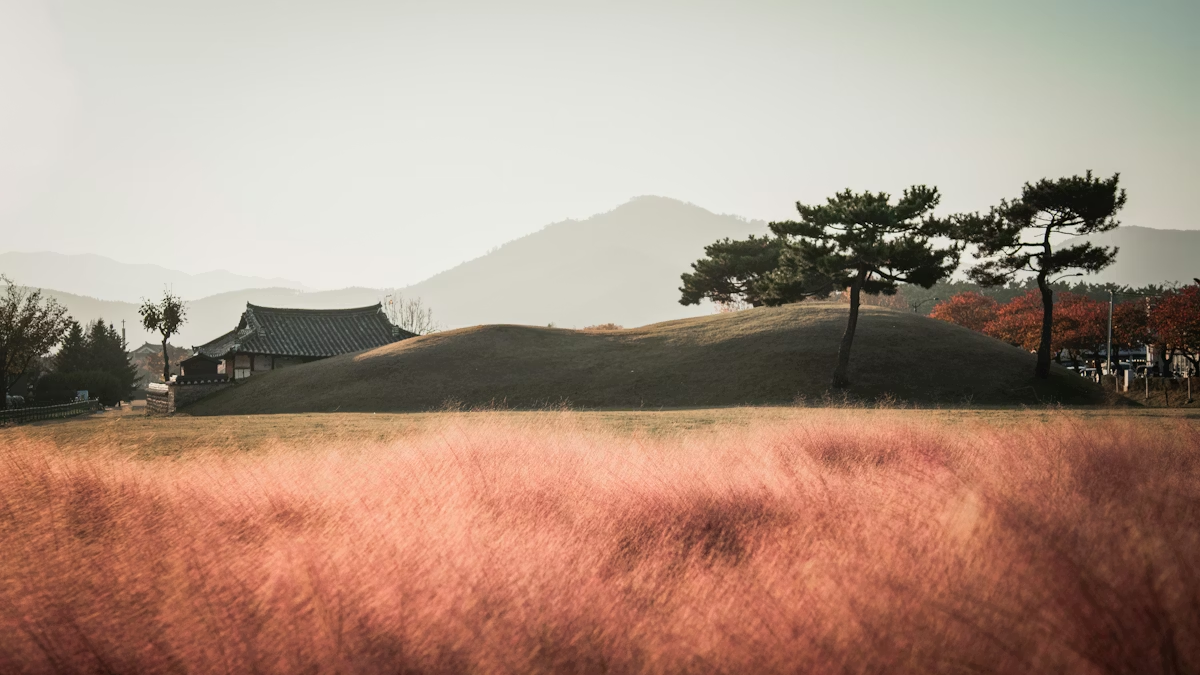
Daereungwon Tumuli Park (대릉원) is where Silla’s royal tombs rest. More than 20 earthen mounds rise gently from a wide lawn, each one the burial site of an ancient king or queen. In spring, magnolias and cherry blossoms bloom above these quiet resting places, creating scenes that photographers come from across the country to capture. Admission is approximately 4,000 KRW (about $2.85 USD). The park’s peaceful atmosphere—despite its proximity to the city—makes it ideal for reflection.
Cheonma-chong (천마총), or “Heavenly Horse Tomb,” is a special burial mound within Daereungwon that has been partially excavated. Inside, archaeologists discovered a wooden coffin decorated with a painting of a flying horse—a masterpiece of Silla art that now resides in the National Museum of Korea.
Cheomseongdae (첨성대) is the oldest astronomical observatory in East Asia, built in the 7th century. Its simple cylindrical form belies the sophistication of Silla engineering. Standing before it, you’re reminded that while Europe was in its Early Middle Ages, Silla was already studying the stars.
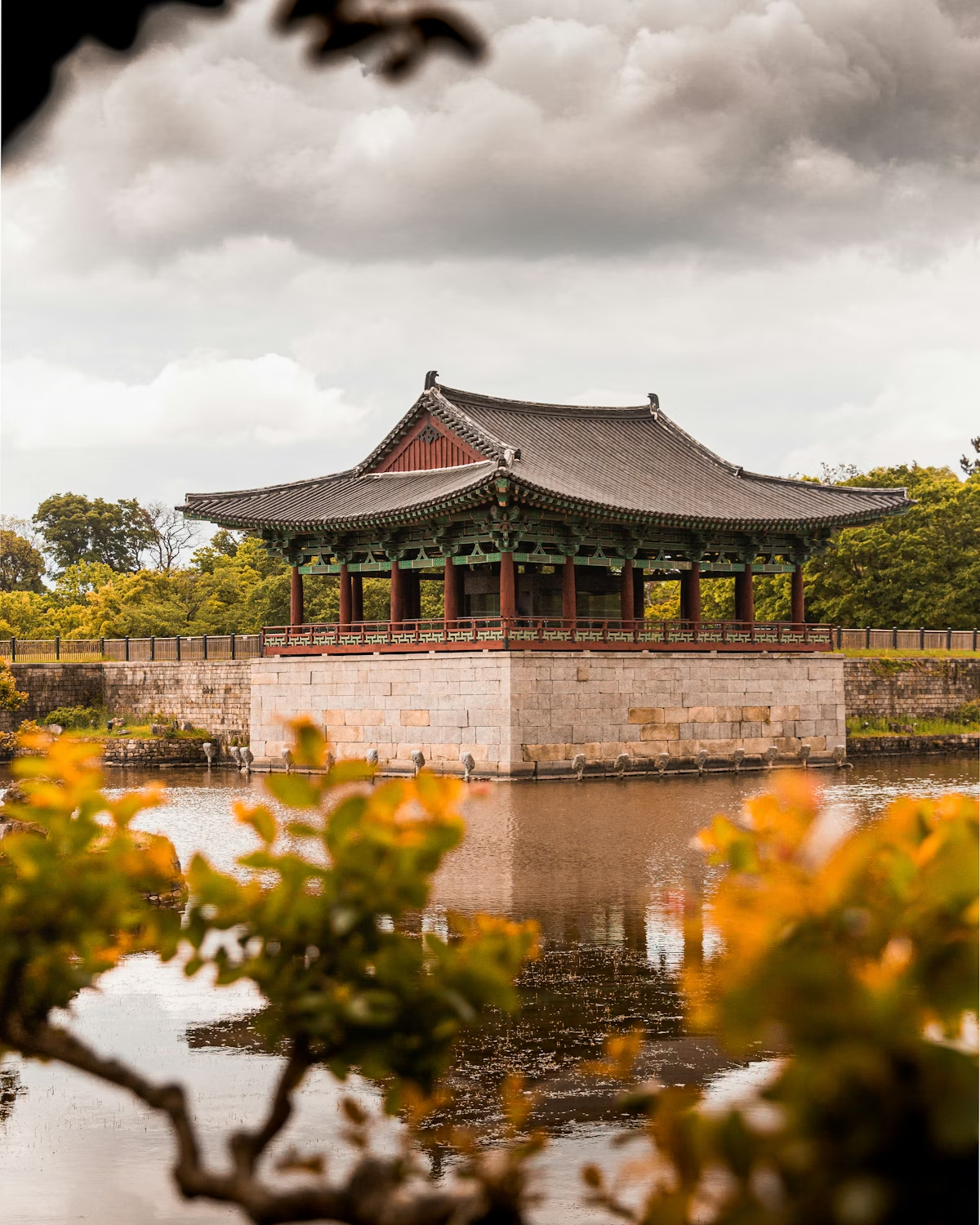
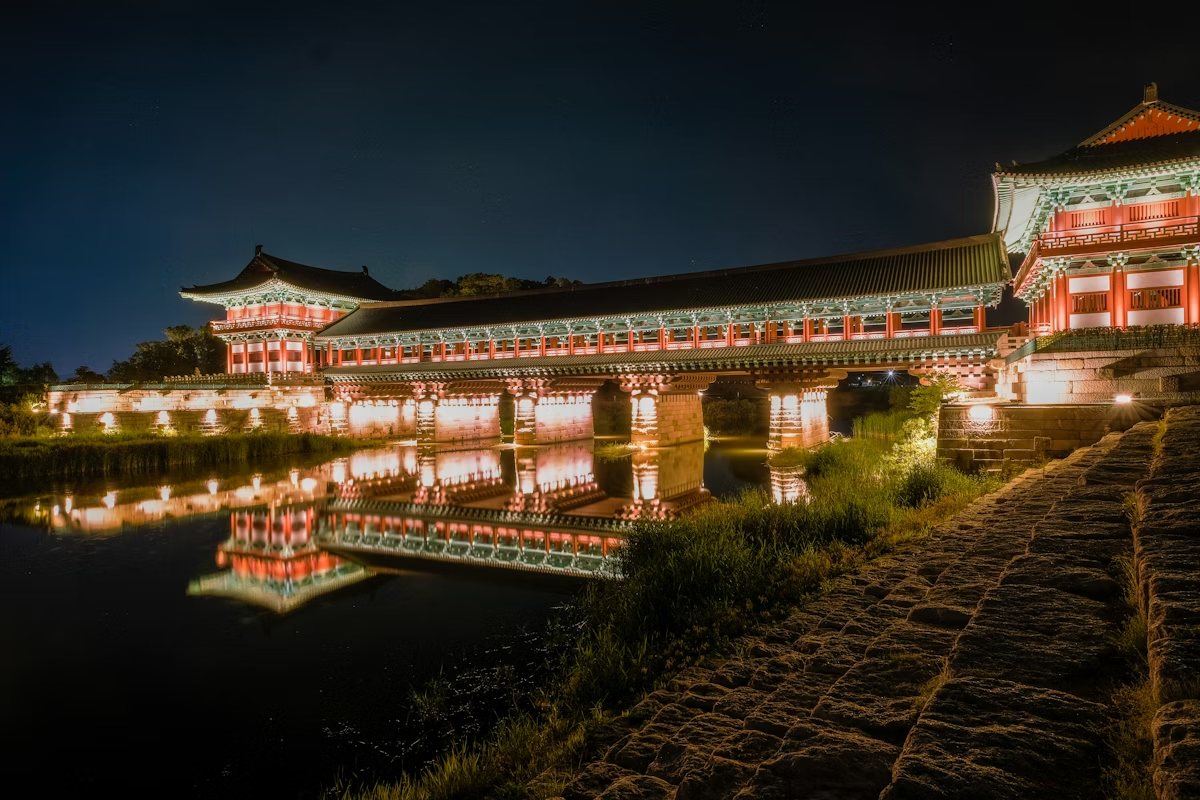
Woljeong-gyo Bridge (월정교) and Donggung and Wolji (동궁과 월지)—formerly called Anapji—are remnants of an ancient royal recreational complex. In daylight, they’re pleasant historical sites; at night, when lanterns illuminate the water, they transform into something magical, with the lights reflecting off the pond’s surface to create scenes worthy of traditional paintings.
💡 Local Tip (aggregated from multiple Korean travel blogs): Car transportation is essential to see Silla’s major sites efficiently. If you’re visiting multiple attractions in a day, a full-day taxi tour (around 80,000–100,000 KRW) is more economical than piecing together buses. Book through your hotel or guesthouse.
Video: “Easy Travel Guide in Gyeongju South Korea | K-Influencer Academy” by MoonNica 문니카 티비
2. Hwangridan-gil: Where Silla Meets Modern Appetite
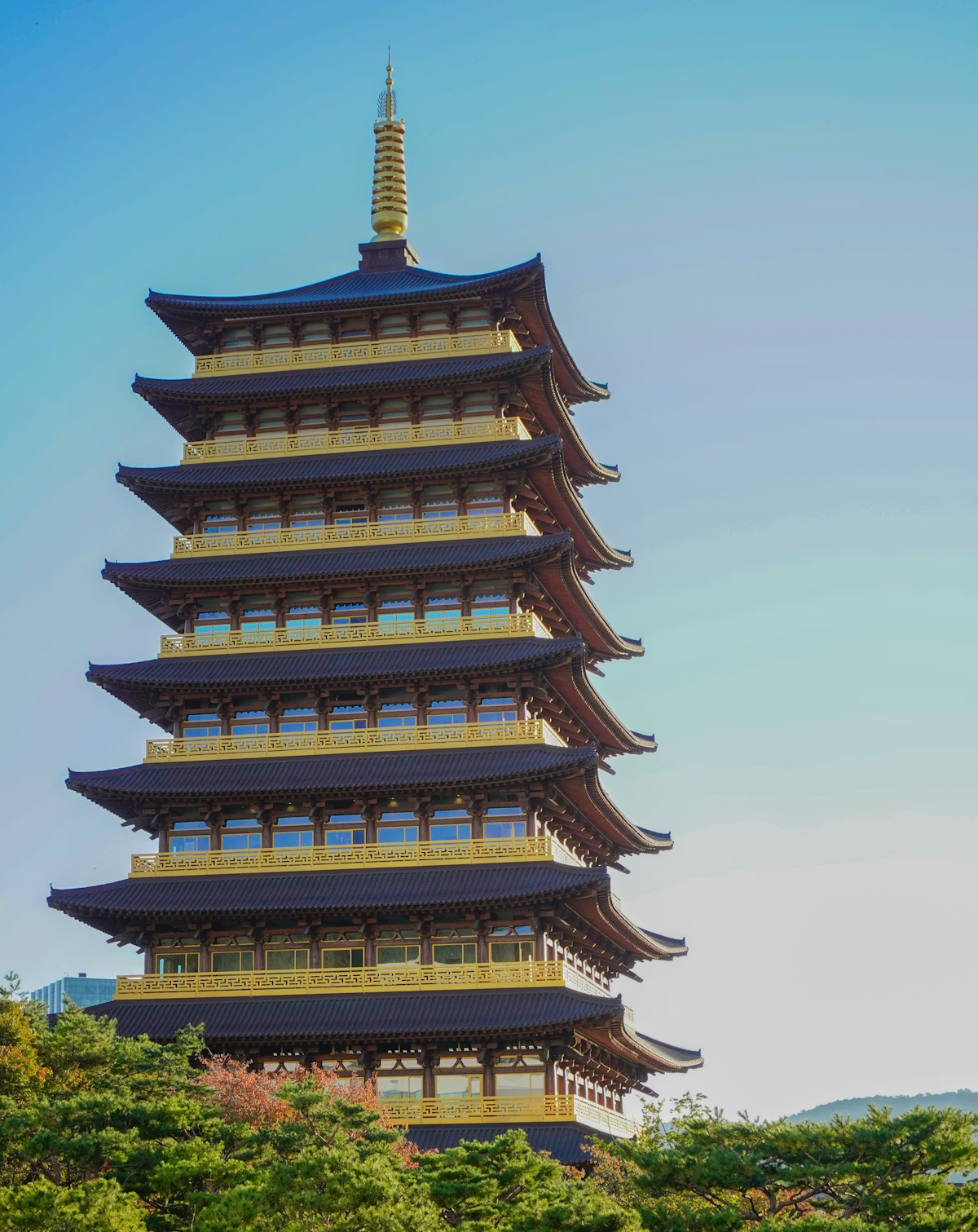
Near Cheomseongdae, Hwangridan-gil (황리단길)—literally “Imperial Road”—has emerged as Gyeongju’s eating and strolling quarter. Traditional hanok buildings have been converted into restaurants, cafés, and boutique shops, creating an atmosphere where history and contemporary comfort coexist naturally.
The signature dishes of Hwangridan-gil reflect Gyeongju’s culinary identity. Yukhoe bibimbap (육회비빔밥), a bowl of warm rice topped with raw beef, fresh vegetables, and egg yolk, all mixed with gochujang (고추장, Korea’s iconic spiced red chili paste), is the undisputed star. The dish showcases the Silla-era principle of balance—the interplay of temperatures, textures, and flavors. Prices typically range from 15,000–20,000 KRW ($10.70–$14.30 USD) depending on the restaurant’s reputation and beef quality. Yugjeon (육전, thinly sliced beef pan-fried with a light batter) is another local favorite. Sokalbi-jjim (소갈비찜, braised short ribs in a savory sauce) rounds out the trio at roughly 20,000 KRW ($14.30 USD) per portion.
In the narrow alleys, several restaurants have earned recognition from Korean food shows for their traditional recipes and ingredient quality. Small details matter—the quality of the sesame oil, the freshness of the vegetables, the precise doneness of the beef—and locals will debate endlessly about which shop does it best.
Rooftop cafés housed in converted traditional buildings offer city views and a moment of respite. Sipping coffee while gazing at the tile roofs below has become an Instagram moment for many travelers.
💡 Local Tip (aggregated from Korean food blogs): Hwangridan-gil restaurants fill quickly during lunch (11:30 AM–1:30 PM) and dinner (5:30 PM–7:30 PM). To avoid queuing, arrive before 11:00 AM or between 2:00–5:00 PM.
Video: “GYEONGJU, korea 🇰🇷 amazing local food, sight seeing & travel guide | culture shock & seoul life ” by 2hearts1seoul
3. Gyeongju After Sunset
Gyeongju’s magic deepens as day turns to evening. Many visitors make the mistake of seeing the city only in daylight and leaving—missing an entirely different Gyeongju that emerges when lanterns light the ancient stones.
Donggung and Wolji After Dark is the peal of Gyeongju’s nighttime experience. The pond, once the recreational center of a Silla royal palace, is illuminated by carefully placed lamps that transform the water into a mirror of warm light. The effect is neither gaudy nor overly romantic—simply beautiful in the way that an old photograph is beautiful. Admission is roughly 3,000–5,000 KRW ($2.15–$3.60 USD). The best views come about an hour after sunset, when the sky has darkened enough for the lanterns to stand out but not so much that you lose the landscape’s definition.
Daereungwon Night Walk offers a quieter nocturnal experience. The ancient tumuli become silhouettes against a starlit sky. Walking among these royal tombs in near-solitude creates an atmosphere of profound stillness—a stark contrast to their daytime bustle. It’s one of the few places in South Korea where darkness and history combine so completely.
Jaman Mural Village (자만벽화마을), perched on a small hill overlooking the city, reveals itself best after sunset. The painted murals seem to glow as streetlamps come on, and the narrow alleys take on a dreamlike quality.
4. Practical Information for the Traveler
Getting There
From Seoul: The KTX (Korea Train Express) departs from Yongsan Station and arrives at Singyeongju Station in about 2 hours. Round-trip fare is approximately 70,000–80,000 KRW ($50–$57 USD). The journey itself—passing through Korean countryside and small towns—is part of the Gyeongju experience.
Within the City: Local buses are inexpensive (base fare around 1,250 KRW, or $0.90 USD), but routes can be confusing for first-time visitors unfamiliar with Korean. Taxis are more reliable; base fare is approximately 3,500 KRW ($2.50 USD). Download Naver Map or KakaoMap on your phone (both now offer English interfaces), as Google Maps provides limited information for Korean cities.
Where to Stay
Hanok Guesthouses (traditional wooden houses converted to lodging) offer an authentic experience at budget prices. Single or shared rooms run 30,000–50,000 KRW per person (approximately $21–$36 USD per night), making them popular with solo and budget-conscious travelers.
Boutique Hanok Hotels provide more comfort and privacy. Expect to pay 150,000–300,000 KRW ($107–$214 USD) per night for a traditional room with private en-suite facilities and a traditional breakfast included.
Best Time to Visit
Spring (March–May) and autumn (September–November) offer ideal weather and scenery. April is particularly special—cherry blossoms and magnolias bloom simultaneously, painting the ancient temples and tumuli in white and pink. Summer (June–August) is hot and humid; the interior of traditional buildings can feel stifling. Winter (December–February) is peaceful and quiet, perfect for contemplation, but afternoon temperatures drop sharply, and heating can be inconsistent in older guesthouses.
Payment and Language
Most restaurants accept both cash and card, though small vendors and market stalls prefer cash. Papago (파파고, a Korean-developed translation app) or Google Translate’s camera-translation function is essential—many restaurant menus are Korean-only. Simple phrases help: “igeo juseyo” (이거 주세요) means “this one, please.”
Navigation Tips
Avoid relying solely on Google Maps for navigation in Korea. Its coverage is limited, and walking directions sometimes route incorrectly. Naver Map and KakaoMap are far superior and now fully support English.
Video: “Where to visit in Gyeongju (1000 years history of Silla) | Korea Travel tips” by Your Korea Friend
5. A City That Reveals Itself Slowly
Gyeongju cannot be fully experienced in a single visit. Few cities in the world have such density of historical significance compressed into such a manageable geography. The royal tombs, the temples, the observatories, the royal ponds—all of it represents nearly a thousand years of one kingdom’s artistic and intellectual achievement. Walking among these monuments, you’re not just sightseeing; you’re standing in the presence of accomplishment that has endured through centuries of war, occupation, and change.
By the time your first visit ends and you’re boarding the KTX back to Seoul, there’s a strong chance you’ll already be planning your return—perhaps to catch the lotus flowers that bloom in summer, or to experience the autumn foliage reflected in Wolji’s waters. The pull of Gyeongju isn’t the pull of novelty or spectacle. It’s something quieter and more insistent: the pull of a place where the human past remains genuinely present.
Sources & References
This guide was curated from the following Korean-language sources:
Blogs & Articles
– “2026 경주 여행 코스 이렇게 짜면 실패 없다 (당일치기·1박2일 현실 동선 총정리)” by 화수분 — https://psm77922.tistory.com/entry/2026-경주-여행-코스-이렇게-짜면-실패-없다-당일치기·1박2일-현실-동선-총정리
– “경주 황리단길 맛집 베스트10 추천 2025 리스트 순위” by 바다문 — https://jdblue2022.tistory.com/entry/%EA%B2%BD%EC%A3%BC-%ED%99%A9%EB%A6%AC%EB%8B%A8%EA%B8%B8-%EB%A7%9B%EC%A7%91-%EB%B2%A0%EC%8A%A4%ED%8A%B810-1
– “경주여행 가볼만한곳 2026 인스타 인생샷 포토존 완벽 가이드” by lifeisshrt — https://pouranything.tistory.com/entry/best-places-to-visit-in-gyeongju
– “🏛️ 경주 여행 완벽 가이드 | 벚꽃 + 역사 + 맛집 1박2일 황금 코스 2026!” by Korea Guide (Yulrang) — https://visit-korea-guide.tistory.com/31
Videos
– “Gyeongju Korea Travel Guide: 12 Things To Do + Itineraries” — https://www.youtube.com/watch?v=WSKa8rY1fVM
– “Easy Travel Guide in Gyeongju South Korea” — https://www.youtube.com/watch?v=FhrFFzJwsiQ
– “GYEONGJU, korea amazing local food, sight seeing & travel guide” — https://www.youtube.com/watch?v=VnF4ZK859xc
– “Where to visit in Gyeongju (1000 years history of Silla)” — https://www.youtube.com/watch?v=WrJOgtuffGU
Images
– Photo on Unsplash — https://images.unsplash.com/photo-1717346486980-1944518800fb
– Photo on Unsplash — https://images.unsplash.com/photo-1669764372822-3cb8476d4f47
– Photo on Unsplash — https://images.unsplash.com/photo-1668850443435-c01eec56c4e5
– Photo on Unsplash — https://images.unsplash.com/photo-1668999980247-db74bc8be117
– Photo on Unsplash — https://images.unsplash.com/photo-1717346255618-1fbc136cb8f9
– Photo on Unsplash — https://images.unsplash.com/photo-1669090787997-1d7878a44be7
All content has been summarized and adapted for international readers. Original authors retain full copyright of their work.