
This guide was curated from 18 Korean-language blog posts, 6 YouTube videos, and 8 Unsplash photographs, then reimagined for international travelers. Full attributions are listed at the bottom of this article.
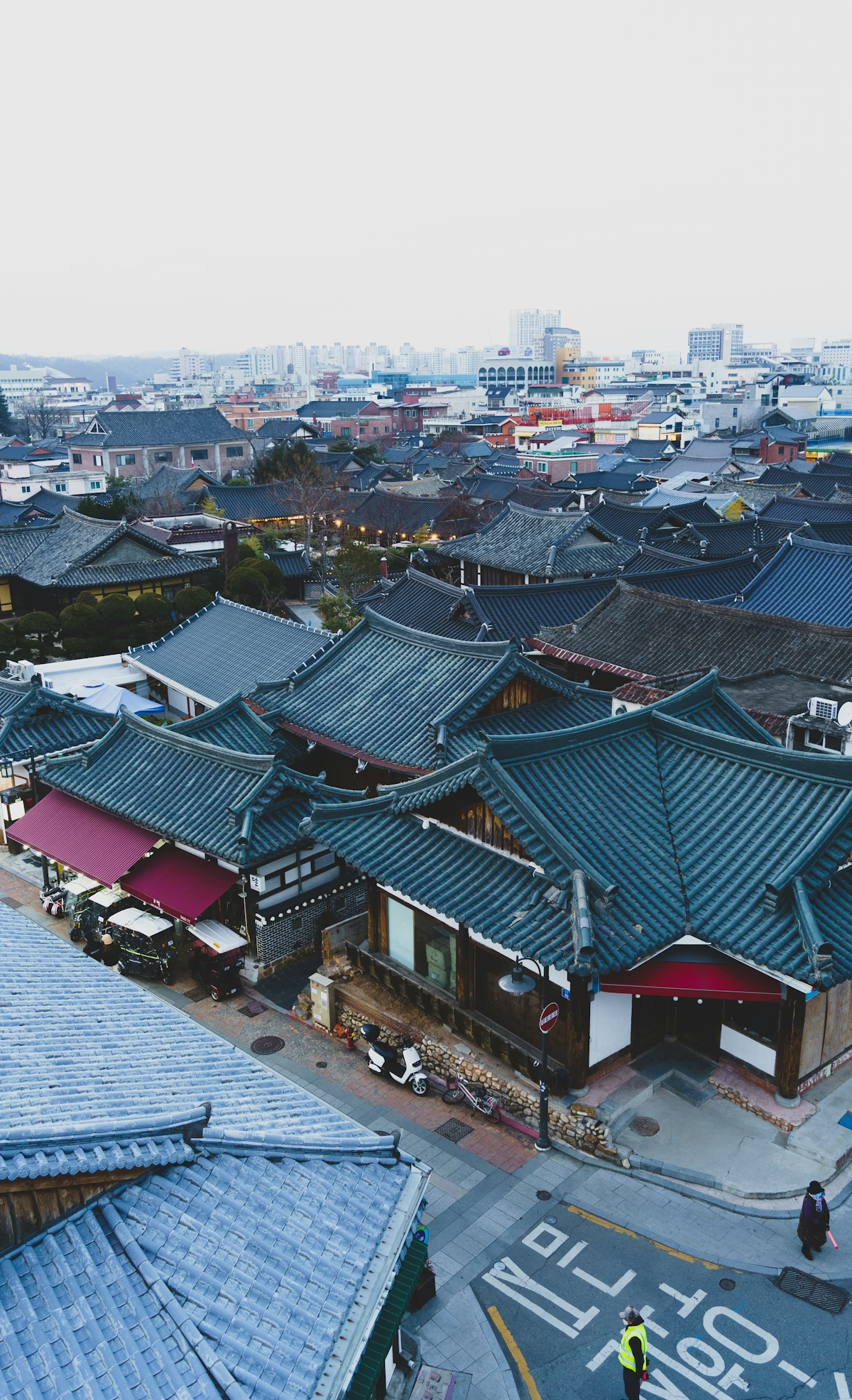
Jeonju is becoming impossible to skip on any serious Korea itinerary. In recent years, this centuries-old city has climbed rapidly through the “places I must revisit” lists of Korean travelers, and international visitors are following suit. Locals call it “the most Korean city in Korea.” More than 700 traditional hanok (한옥, wooden houses built with curved roofs and wooden frames that represent Korean architectural heritage) cluster in a single historic neighborhood. Gyeonggi-jeon (경기전, the royal shrine housing the portrait of Joseon’s founder) preserves the spiritual core of the dynasty. Jeondong Cathedral (전동성당, a red-brick church completed in 1914) adds European grace to hanok rooflines. And the food culture is considered the richest in the nation. In April, when magnolias and cherry blossoms frame the rooflines, Jeonju reaches peak magic.
Video: “How to spend 2 days in Jeonju — Spring trip, Hanok Village, cafes, museums” by Sol Life
1. Cultural Spaces Where Jeonju Reveals Its Soul
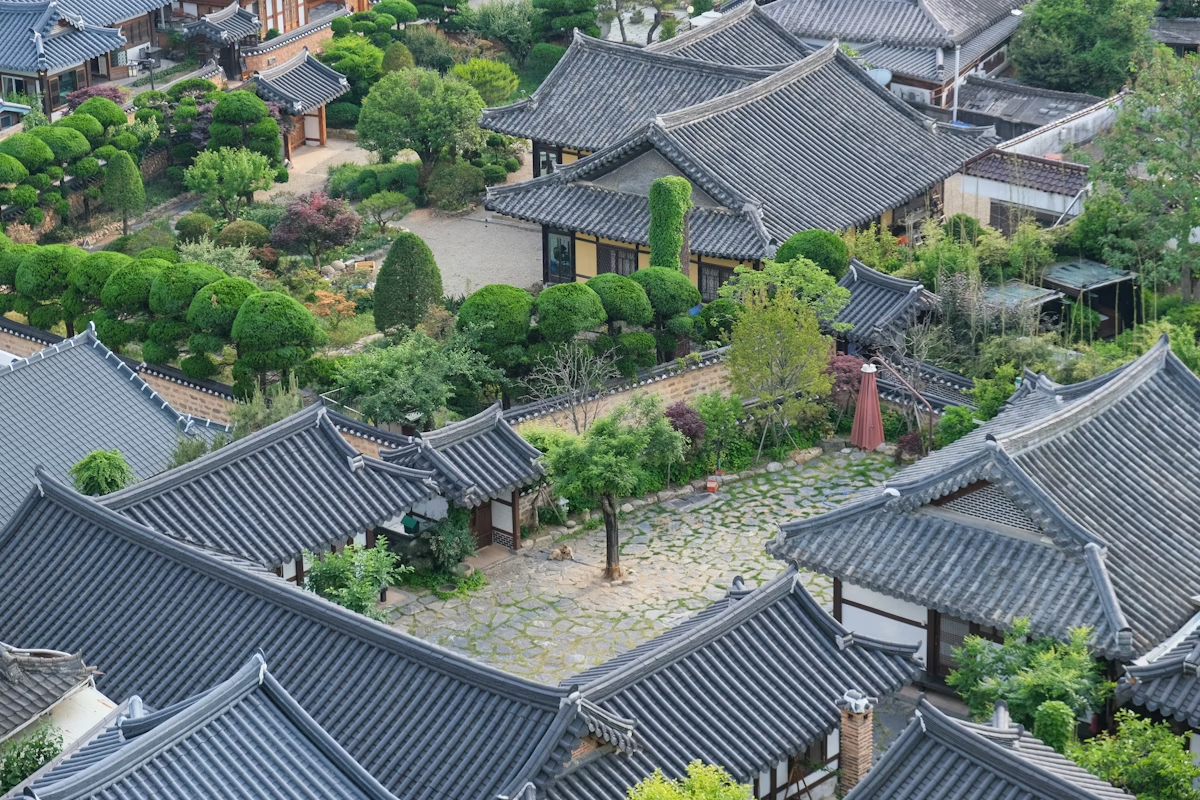
To truly experience Jeonju, immerse yourself in its history first. The major cultural landmarks all sit within a 1 km radius of Hanok Village (한옥마을, the historic district preserving over 700 traditional Korean wooden houses), so a single devoted day is enough to meet the city’s true face.
Gyeonggi-jeon is the spiritual heart of Jeonju. This shrine houses the eojin (어진, a formal royal portrait) of King Taejo, founder of the Joseon dynasty. Admission is 3,000 KRW (~$2.15 USD), and the grounds open from 9 AM to 6 PM daily. Dense forest paths and elegant hanok buildings interweave, and walking slowly through the grounds makes your body and mind naturally decelerate. One travel blogger (“여행톡톡”) described it as “a place where you can physically feel time slowing down as you admire the clean lines of hanok and the grain of aged wood.”
Right next door stands Jeondong Cathedral, completed in 1914 as the first Western-style building in the Honam region. Its red-brick facade—a blend of Romanesque and Byzantine styles—contrasts beautifully with the hanok rooflines and is one of Jeonju’s most-photographed views. You can walk from Gyeonggi-jeon to the Cathedral in moments, making both a natural pairing.
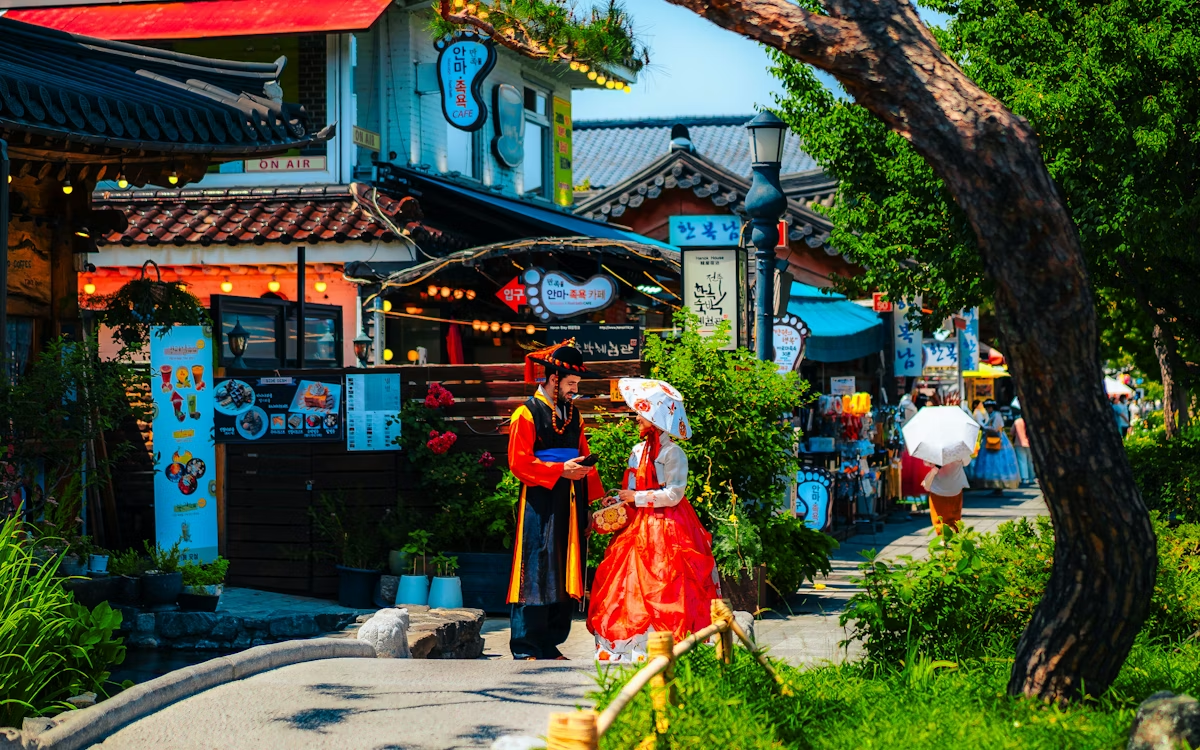
Jeonju Hyanggyo (전주향교, a Confucian academy from the Joseon era) offers rare stillness. Admission is free, and in spring the ancient ginkgo trees bud yellow-green.
A short uphill walk from Hanok Village brings you to Omok-dae (오목대, a pavilion overlooking the village from a high point). From here, more than 700 tiled rooftops undulate like waves—a scene borrowed from a traditional landscape painting. The climb takes about 10 minutes and rewards you with views that change dramatically with light and season.
If you have time for one more stop, visit Deokjin Park (덕진공원), about 10 minutes by car from Hanok Village. The park’s well-maintained lakeside paths are especially enchanting in spring, when cherry blossoms frame the water. It’s beloved by locals and photographers alike.
Jeonju Nanjang (전주난장, an immersive indoor museum) is perfect for rainy days or heat waves.
💡 Local Tip (aggregated from multiple Korean blogs): Visit cultural spaces between 9 and 10 AM. Crowds thicken in the afternoon, making photographs clearer and quiet reflection easier.
Video: “JEONJU HANOK VILLAGE 전주한옥마을 (1h30m Away from SEOUL!)” by Mathias Mattu
2. Centuries-Old Flavors: The Food of Jeonju
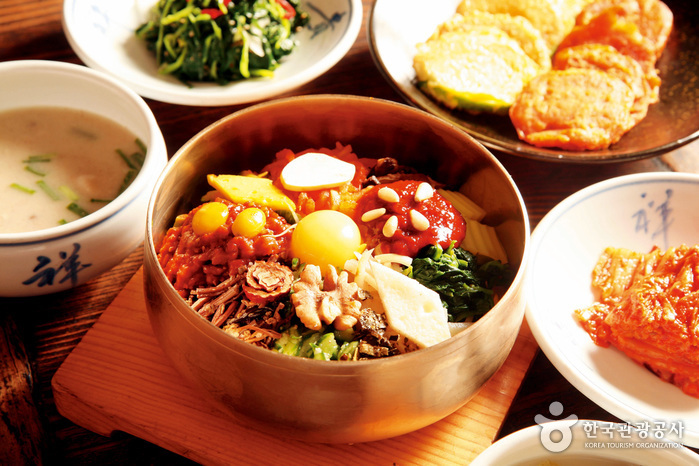
Food is the undisputed highlight of any Jeonju trip. During the Joseon dynasty, many ingredients destined for the royal table came from this region, earning Jeonju the nickname “city of food”—a reputation it has kept for centuries. The restaurants below were all recommended by multiple Korean bloggers independently, making them your most reliable guides to authentic local flavors.
2-1. Kongnamul-gukbap — The breakfast that opens a Jeonju morning
Kongnamul-gukbap (콩나물국밥, a simple but comforting dish of seasoned bean sprouts served over rice with a savory broth poured hot over the top) is the unofficial opener of a Jeonju morning. Unlike versions served in Seoul or Busan, Jeonju’s uses soybean sprouts blanched fresh at dawn and a deep, umami-rich broth made with dried pollack, producing a soup that’s simultaneously clear and intensely flavorful.
- Hyundae-ok Jeonju Main Branch (현대옥 전주본점) — Operating since 1979, this 45-year institution is run with quiet precision. A bowl costs just 8,000 KRW (~$5.70 USD), making it one of the country’s best value-for-flavor meals. One bite and travel fatigue dissolves.
- Sambaekjip Main Branch (삼백집 본점) — 70 years of tradition, famous for making only 300 bowls per day. The kitchen’s restraint is part of the appeal. Featured on Suyoumisikhoé (수요미식회, Korea’s most beloved food show).
2-2. Bibimbap — Jeonju’s signature dish
Bibimbap (비빔밥, Korea’s iconic mixed-rice dish in which vegetables, beef, egg, and spicy chili paste unite over warm rice) is so tied to Jeonju that locals consider the city its spiritual home. What distinguishes Jeonju-style bibimbap is the extraordinary variety of ingredients—often 30+ components—and the use of notsoe (놋쇠, brass) bowls that hold heat longer, deepening the flavors.
- Hasuknyoung Kamassot Bibimbap (하숙영 가마솥비빔밥) — Known for a gochujang (고추장, red chili paste) fermented for three years. The signature yuk-hoe bibimbap (육회비빔밥, bibimbap topped with thinly sliced raw beef) costs 17,000 KRW (~$12 USD). Featured on both Siksaek Heo Young-man (식객 허영만, a celebrated Korean food documentary) and Suyoumisikhoé.
- Han-gukgwan Main Branch (한국관 본점) — Founded in 1971, now 54 years established. The signature notsoe bibimbap at 14,000 KRW (~$10 USD) benefits from the bowl’s heat-retention properties, which coax deeper, rounder flavors from each ingredient.
Video: “Trying Korea’s best BIBIMBAP — Jeonju hanok village food tour” by 2hearts1seoul
2-3. Sundae, Kalguksu, and One-Bowl Wonders
Jopemnyae Nammun Pi-sundae (조점례 남문피순대) — 50 years of tradition. The specialty is pi-sundae (피순대, Korean blood sausage made with pork blood, glass noodles, and spices) and their sundae-gukbap (순대국밥, sundae served in a rich rice soup) at 9,000 KRW (~$6.40 USD). Featured on Saenghwal-ui Dalin (생활의 달인, a Korean culinary arts show). The broth is deeply savory without overwhelming—a surprisingly approachable introduction to sundae for first-timers.
Veteran Kalguksu (베테랑 칼국수) — A 70-year-old kalguksu (칼국수, hand-cut wheat noodles in a savory broth) shop near Hanok Village. Their signature bowl arrives generously dusted with perilla powder and shredded seaweed, with a thick, nutty broth. Prices hover around 7,000 KRW, making it a favorite lunch stop. Blogger “todonote” built an entire 1-night, 2-day itinerary around it.
Han-gukjip (한국집) — An old-school restaurant serving both bibimbap and a full hanjeongsik (한정식, a traditional Korean set meal with many small side dishes showcasing regional flavors). Travelers who don’t want to leave Jeonju with only bibimbap in their memory often order the set meal here to experience the full breadth of the city’s side-dish culture.
Video: “ORIGINAL Bibimbap & KOREAN STREET FOOD Night Market in Jeonju” by Strictly Dumpling
💡 Local Tip (aggregated from multiple Korean blogs): Most Jeonju restaurants fill up between 11:30 AM–1:30 PM and 5:30–7:30 PM. To avoid lines, arrive before 11 AM or after 2 PM.
3. Hanok Village Café Culture
Once your appetite is satisfied, it’s time to slow the pace of travel with a cup in hand. The café culture in Hanok Village is unusual—something magical happens at the precise intersection where traditional architecture carefully welcomes modern sensibilities. These cafés were all recommended by at least three Korean bloggers independently, making them your most reliable guides.
3-1. Hanok-view Instagram spots
Ccha-gyeong (차경, meaning “tea view”) — The #1 pick from three different blogs. Located at 61 Gyeonggi-jeongil-ro, it’s famous for its picture-perfect window framing of hanok rooflines and serves signature coffee alongside traditional yanggaeng (양갱, sweet red-bean jelly with a delicate, almost translucent quality). Open 11 AM–8 PM.
Café Illerito (카페 이르리) — A jwasik (좌식, floor-seating style) café at 69 Eunhaengno housed in a 100-year-old hanok. Each seat offers a different view of rooflines and alleyways, so wherever you sit produces a frame-worthy photo. Weekdays 9 AM–9 PM, weekends later.
Old Brick (올드브릭) — A vintage café housed in a renovated red-brick building. Spacious seating and moody lighting make it popular with groups and anyone seeking a contemplative afternoon.
3-2. Traditional tea houses
Kyodong Dawon (교동다원) — At 65-5 Eunhaengno. This traditional dawon (다원, tea room) inside a hanok serves carefully prepared tea sets including bo-i-cha (보이차, aged fermented Chinese oolong tea), yuja-cha (유자차, Korean citron tea with honey), and omija-cha (오미자차, five-flavor berry tea with a bright, complex tartness). It’s the best choice when you want to escape the crowds of the main tourist streets.
Gonggan Bom (공간봄, “Spring Space”) — A hanok café serving both traditional teas and pour-over coffee. A small inner courtyard makes outdoor seating particularly pleasant in spring and fall.
3-3. Larger cafés and hidden gems
Neoui-goyo (너의고요, “Your Silence”) — A large café on the outskirts with an in-house bakery. Quiet and spacious.
Dong-yeong Coffee (동영커피) — A tiny roastery in a renovated old hospital building. Blogger “heedoee” called it “the best coffee flavor in Jeonju.”
💡 Local Tip (from 1itt1e, summari, and goraekun blogs): Cafés are busiest between 2 and 5 PM. For a quieter experience, visit early morning or after 7 PM.
4. Jeonju After Dark
Most travelers see Hanok Village only in daylight and leave—but Jeonju reveals a second face after sunset. These are the spots blogger “adeukes” highlighted in a Best 9 guide to Jeonju night views, filtered for first-time international visitors.
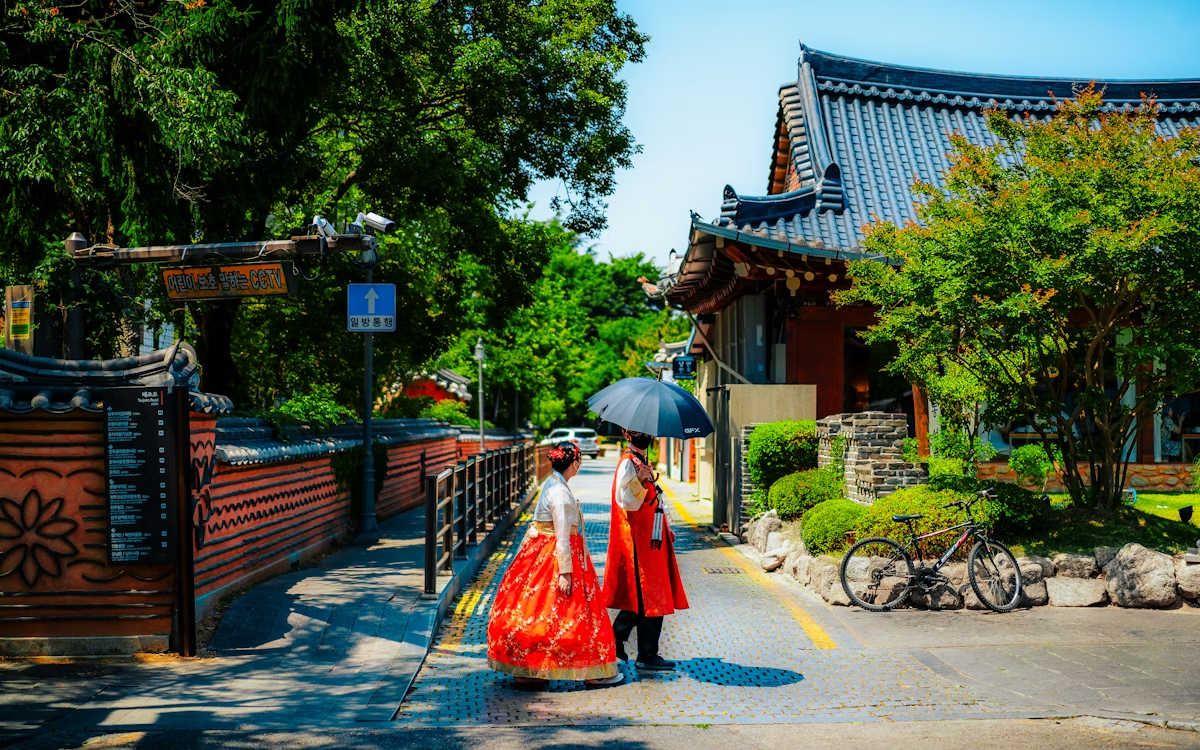
Jaman Mural Village (자만벽화마을) — Perched on a small hill above Hanok Village. As the sun sets, warm lamps light up the narrow alleys, and the painted murals seem to come alive with new energy.
Jeonju Makgeolli Alley (전주 막걸리 골목) — In the Samcheon-dong and Seosin-dong neighborhoods. For about 15,000 KRW per person (~$11 USD), you get a bottle of makgeolli (막걸리, Korea’s milky, lightly sweet fermented rice wine with a low alcohol content) and an astonishing spread of complimentary side dishes. This is the most authentic, local experience you can have in Jeonju.
Nambu Market Night Market (남부시장 야시장) — Every Friday and Saturday evening, over 100 food trucks gather in one place. It’s the perfect way to sample many Korean street foods in a single visit. Budget 20,000–30,000 KRW (~$14–$21 USD) per person.
Hanok Village night walk — The Gyeonggi-jeon and Jeondong Cathedral area is beautifully lit after dark. Walking alone is an experience in itself, and there are far fewer crowds than during daylight hours, making photography easier and the mood more intimate.
5. Practical Travel Tips — The Complete Rundown
Getting there
- Seoul → Jeonju: The KTX (Korea Train eXpress, the nation’s bullet train) is fastest. Depart from Yongsan Station, arrive at Jeonju Station in about 1 hour 30 minutes. Round trip approximately 60,000 KRW (~$43 USD).
- Within the city: Hanok Village is compact and entirely walkable. For outlying spots (Deokjin Park, Neoui-goyo Café, etc.), use a T-money card (a rechargeable transit card accepted on buses and subways nationwide) or grab a taxi (base fare 4,000 KRW).
Best time to visit
- Spring (March–May) and autumn (September–November) are best. April in particular pairs cherry blossoms and magnolias with hanok rooflines—peak photography season and the most evocative time to experience the city.
- Summer (July–August) can be hot and humid inside hanok interiors, while winter (December–February) brings peaceful quiet but sharp cold after 5 PM.
Map apps
The single biggest pitfall for foreigners is “trusting Google Maps to navigate.” For regulatory reasons, Google Maps in Korea has limited detail—café and restaurant info is often incomplete, and walking directions sometimes route incorrectly. Instead, download Naver Map or KakaoMap. Both now support English interfaces.
Language
English is less widely spoken in Jeonju than in Seoul or Busan. Most restaurant menus are Korean-only, so keep Papago (파파고, a Korean-built translation app) or Google Translate’s camera-translation feature ready. Pointing at the menu while saying “igeo juseyo” (이거 주세요, “this one, please”) also works.
Payment
Most restaurants and cafés accept both cash and card, but small stalls and market vendors prefer cash. For international travelers, multi-currency cards like Wise or Revolut minimize foreign-transaction fees.
How long to spend in Hanok Village
The village itself is smaller than most people expect. 2–3 hours covers the main points; add cafés, meals, and shopping and you’ll spend half a day to a full day comfortably.
Video: “Korea 2025 Travel Guide: Best places to visit in Jeonju Hanok Village” by Aika Vlog (아이카)
6. A City Worth Returning To

There’s something only Jeonju can give you—not Seoul’s velocity, not Jeju’s landscapes, not Gyeongju’s hush. Walking its narrow alleys, sipping coffee beneath hanok rooflines, sharing makgeolli with locals at sunset—these moments reveal Korea’s deepest flavor.
Jeonju is not a city to complete in one visit. It reveals a different face each season, and every return uncovers new alleys and tastes. You’ll leave thinking “I want to come back in summer for the lotus blossoms” or “autumn when the leaves turn.”
May you find Korea’s deepest soul in Jeonju.
Sources & References
This guide was curated from the following Korean-language sources:
Blogs & Articles
– “전주 맛집 베스트10 추천 2025” by 바다문 — https://jdblue2022.tistory.com/entry/전주-맛집-베스트10-2
– “실제보다 더 매력적인 전주 봄 여행지 BEST 4” by 여행톡톡 — https://brunch.co.kr/@qrssa/4899
– “전주 감성 카페 BEST 6” by 1itt1e — https://1itt1e.tistory.com/29
– “전주 1박2일 여행코스추천” by todonote — https://todonote.tistory.com/10
– “전주 가볼만한곳 완벽 가이드 2025” by haro0428 — https://haro0428.tistory.com/
– “전주 여행 야경 명소 BEST 9” by adeukes — https://adeukes.tistory.com/
– “전주 가볼만한 카페 3군데” by heedoee — https://heedoee.tistory.com/
Videos
– “How to spend 2 days in Jeonju” by Sol Life — https://www.youtube.com/watch?v=P34fglUFPtU
– “Korea 2025 Travel Guide: Best places to visit in Jeonju Hanok Village” by Aika Vlog (아이카) — https://www.youtube.com/watch?v=PQhoAyGEoFg
– “JEONJU HANOK VILLAGE 전주한옥마을 (1h30m Away from SEOUL!)” by Mathias Mattu — https://www.youtube.com/watch?v=itSRZYtKuT0
– “Trying Korea’s best BIBIMBAP — Jeonju hanok village food tour” by 2hearts1seoul — https://www.youtube.com/watch?v=YMqvFL7uNPs
– “ORIGINAL Bibimbap & KOREAN STREET FOOD Night Market in Jeonju” by Strictly Dumpling — https://www.youtube.com/watch?v=gUwiVRYbeZ0
Images
– Photo by Martin Bennie on Unsplash — https://unsplash.com/photos/n-XFCbKqQQY
– Jeonju Gogung bibimbap — Korea Tourism Organization (KOGL Type 3)
– Photo by Minku Kang on Unsplash — https://unsplash.com/photos/B9LU6tfetRQ
– Photo on Unsplash — https://unsplash.com/photos/f6gzs3Dg_rM
– Photo on Unsplash — https://unsplash.com/photos/PnO5Uh6Ms8M
– Photo on Unsplash — https://unsplash.com/photos/Fybpm_fUaKQ
– Photo on Unsplash — https://unsplash.com/photos/uyjIW7N1GR0
All content has been summarized and adapted for international readers. Original authors retain full copyright of their work.